Archive for the ‘Classroom Level’ Category
Preschool and kindergarten students at Child’s View Montessori School in Portland, Oregon, share their method of solving conflicts using the Peace Rug. Watch an interview with Dory and a demonstration by Leo and Faith.
Video not loading correctly? please view the videos on Vimeo at https://vimeo.com/wethepeacemakers
Video not loading correctly? please view the videos on Vimeo at https://vimeo.com/wethepeacemakers
Upper Elementary students at Abintra Montessori School, a preschool-8th grade school in Nashville, Tennessee, celebrated the school’s 25th anniversary by writing an original school song and recording a music video. This We the Peacemakers video catches up with the faculty and students who created the song and video and gives a glimpse into how it was done. Watch the original school song music video, “From Within,” on Abintra Montessori School’s Facebook page.
How did writing a school song and recording a music video impact student learning? Sherry Knott, Abintra Montessori School’s Executive Director, shares about the kind of learning that takes place when students reflect on, create and share their knowledge. This video also features perspectives from Arts Coordinator Christine Orrall and LaTonya Turner Riley, the music video director and a parent at Abintra.
Please share your thoughts or questions about these videos by leaving a comment!
Trouble loading video? View the videos on Vimeo at https://vimeo.com/wethepeacemakers
Middle School students at Parkview Montessori Magnet School in Jackson, Tennessee, engage in a Socratic dialogue about the effects of a peace-centered school on their lives. Many have attended this public, magnet program since Kindergarten. Just as interesting are the contrasts presented by students who attended other public schools prior to Parkview.
Learn more about the Parkview conflict resolution model. Reflections on “the peace bear” and more from Principal Melinda Harris, Instructional Coach Taja Sanders and middle school teacher Peggy Smith.
Please view the videos on Vimeo at https://vimeo.com/wethepeacemakers
Please share your thoughts or questions about these videos by leaving a comment!
Learn about daily soup, a sidewalk building project and reactions to the word “peace” in an interview Anita Pishko, founder and director of Central Montessori School in Richmond, Virginia. This video talks about Central’s relationships with Frog Bottom Farm and artist Sahin Altug.
Trouble loading video? View the videos on Vimeo at https://vimeo.com/wethepeacemakers
Please share your thoughts or questions about this video by leaving a comment!
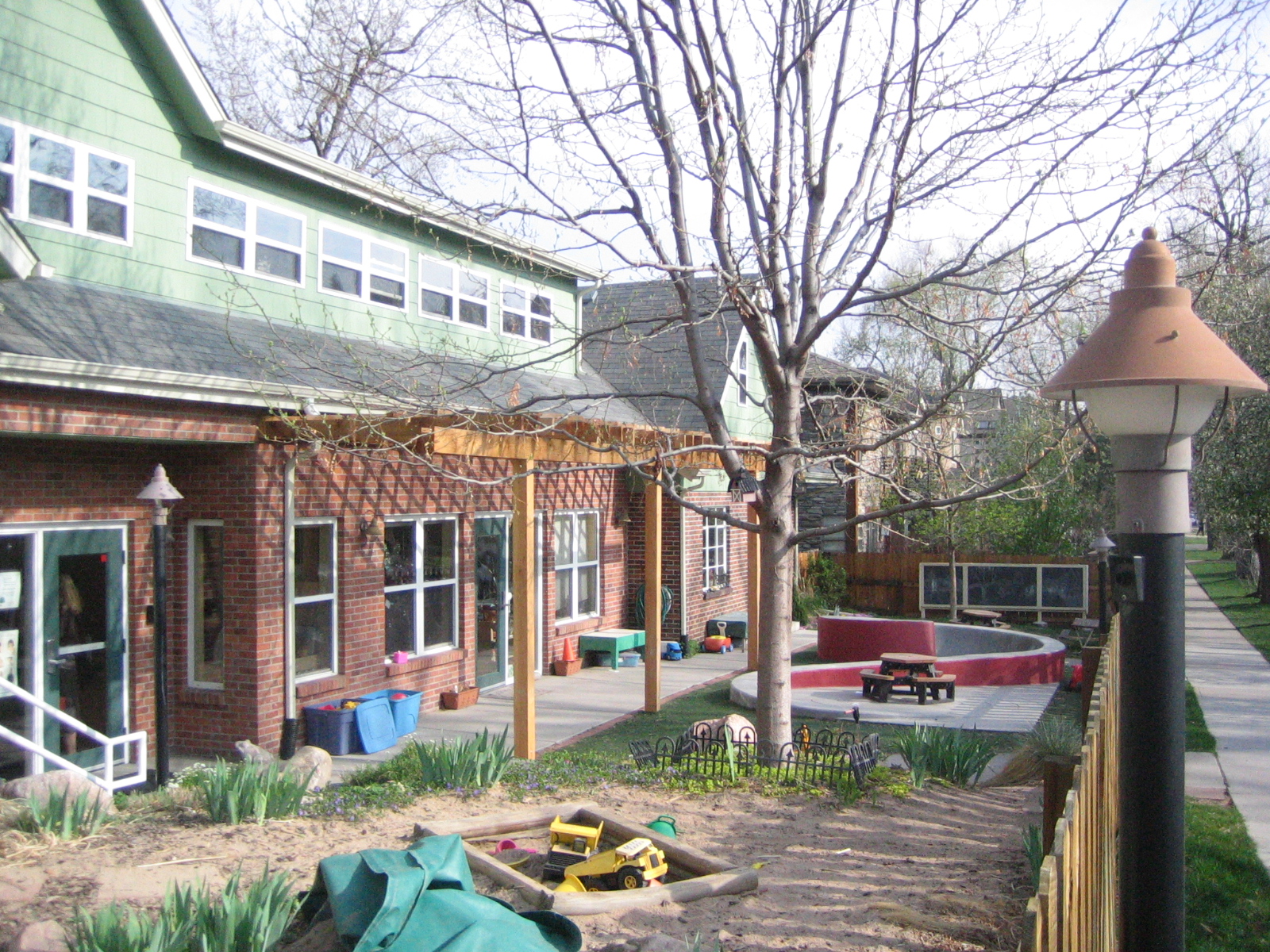
April 20, 2010 — The final stop of the We the Peacemakers tour was at Children’s Garden Montessori School, a toddler and early childhood program in Denver’s Capitol Hill neighborhood. This school provides care for around ninety students age 18 months to 6 years during the academic year in half-day and full-day programs.

While discussing my visit with Head of School Kathryn Ross, she suggested recording an interview about peace with the staff as a whole group. I am very grateful to the thirteen teachers and administrators at Children’s Garden for taking part in a group interview following a busy day of teaching. (On school picture day, no less!) This group of educators is truly generous, gracious and, as the interview reveals, passionate and articulate about Montessori. What resulted was an amazing conversation about how everyday life in a Montessori classroom teaches peace.
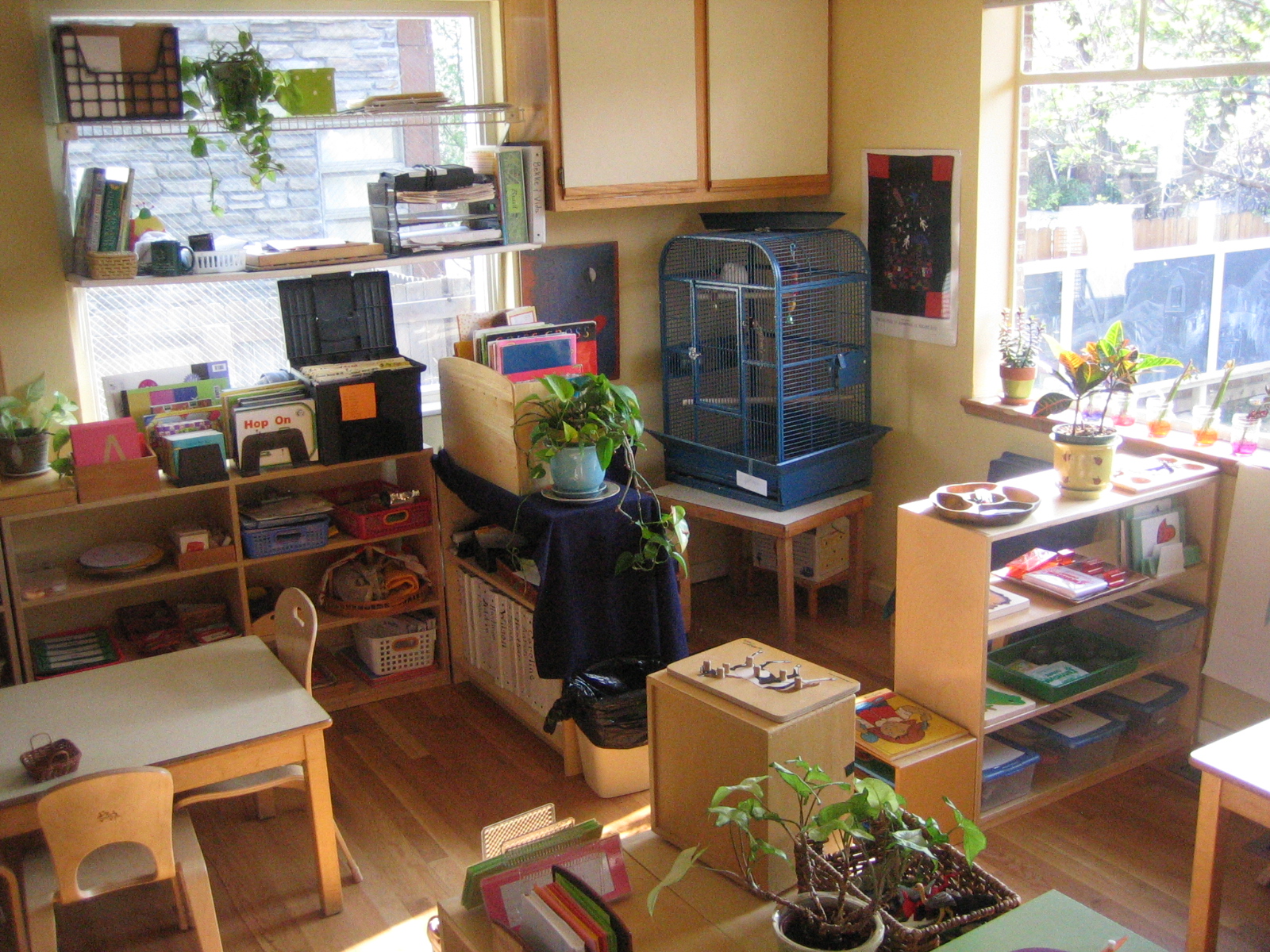
We the Peacemakers strives to celebrate innovation and best practices in Montessori. Though not the main topic of the interview, Children’s Garden Montessori School is taking a unique approach to art education. Over a number of years, Children’s Garden has been working to incorporate the Reggio Emilia approach to arts into the fabric of the school. There is an art studio known as Zach’s Place in the center of the school where children may visit to make art throughout the Montessori work cycle. A full-time art teacher guides and instructs in the studio.
To learn much, much more about this innovation you can read Head of School Kathryn Ross’s thesis on the topic. Her thesis, “Montessori and Reggio Together: Exploring Possibilities,” was awarded first place in the American Montessori Society’s 2010 Master’s Thesis Award. Congratulations! Here is a link to the full-text thesis and a link to the American Montessori Society’s Thesis and Dissertation Award page.
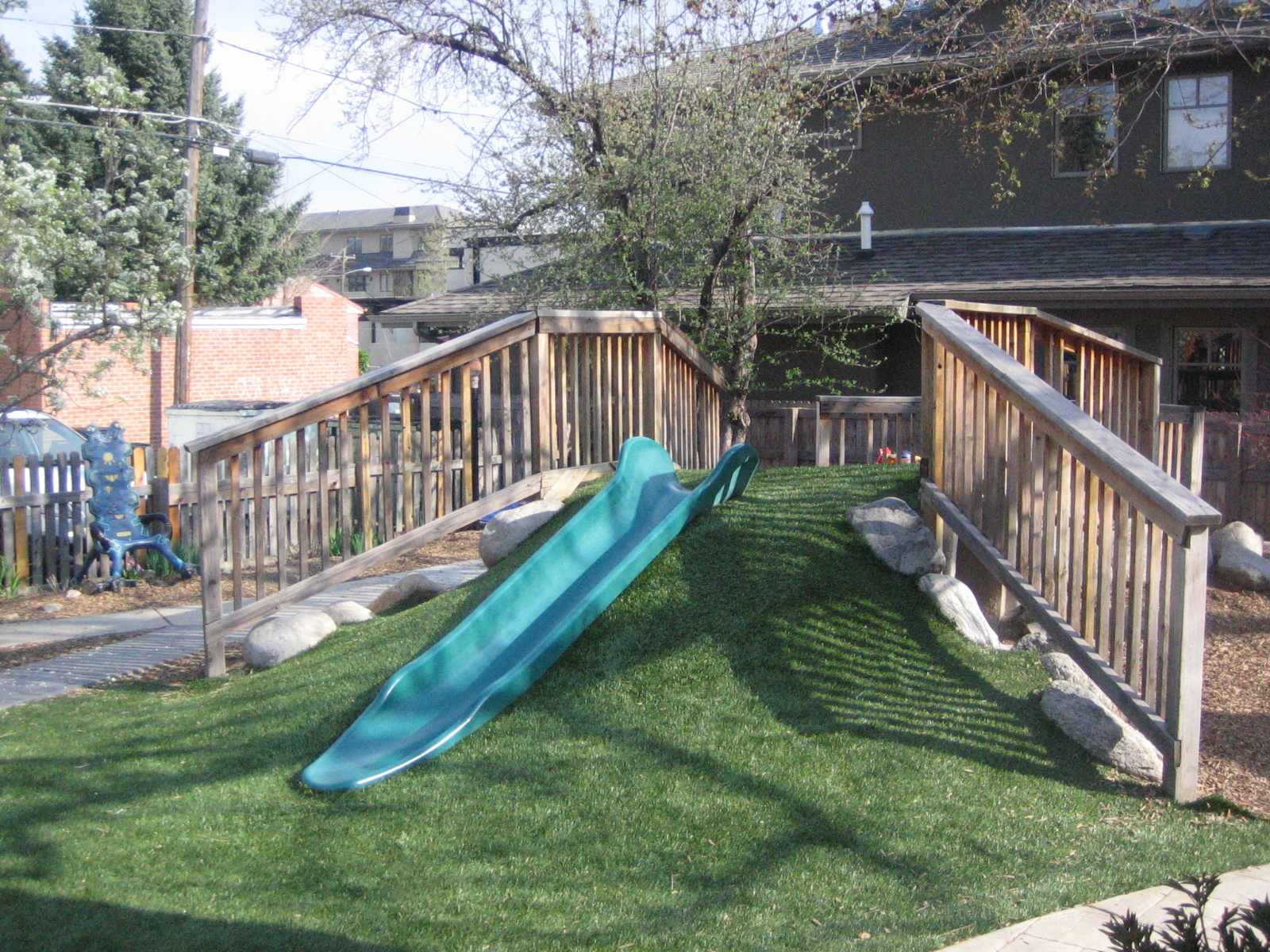
 In the big backyard at Children’s Garden.
Countryside Montessori School (CO)
Posted on: June 1, 2010
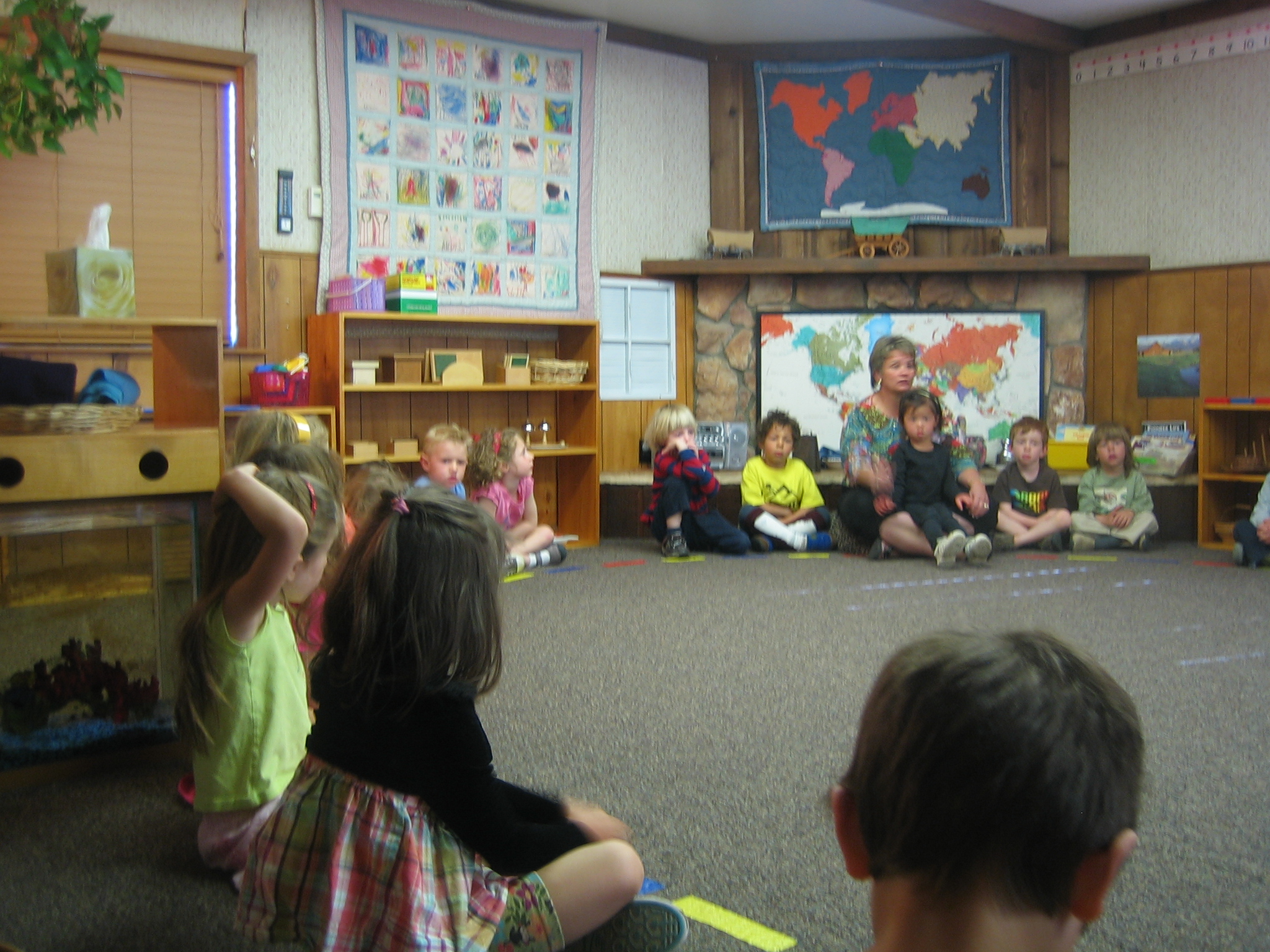
Boulder, CO — April 19, 2010 — The teachers at Countryside Montessori School are a talented team of educators who work with 40 3-6 years old in an all-day, all-year program. The whole group of children attend school together in a spacious and homey converted residence. All of the familiar practical life, sensorial, math, geography and language materials are on the shelves and in use throughout my visit. However, one object in the environment immediately caught my attention:
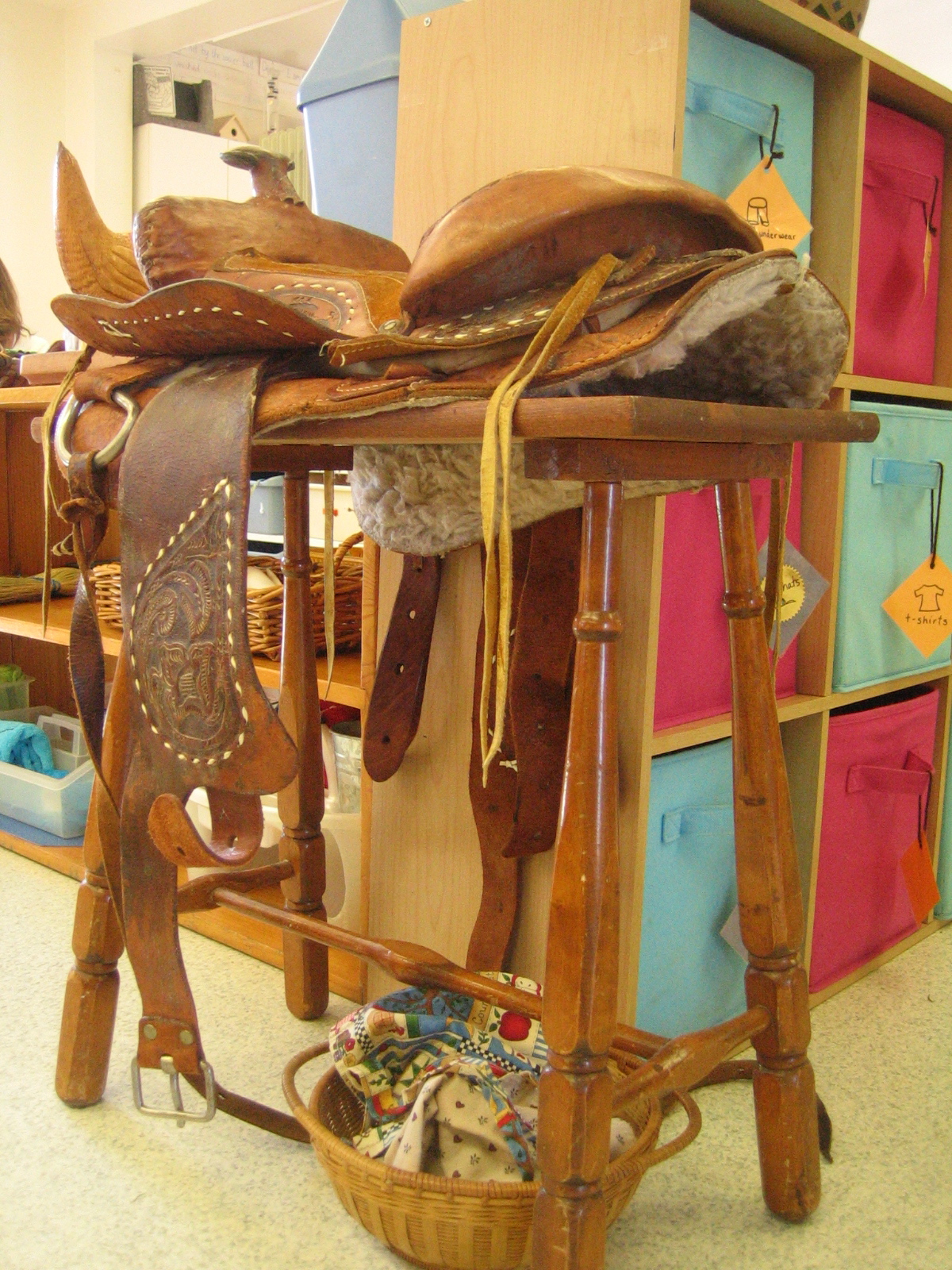
A saddle in a Montessori classroom?
It begins to make sense when Nancy Ahlstrand, the school founder and director, explained Countryside’s unique approach to the cultural curriculum. Over time, Countryside has developed a cultural curriculum that literally infuses each area of the classroom with materials and exercises that relate to the culture being studied. Can you figure out the saddle yet?
During my visit, the children at Countryside were learning about a cultural history that exists in their own backyards: the lives of Colorado pioneers. During group time, children together imagine the lives of pioneers traveling long distances by horse and wagon.
The saddle brings a touch of pioneer life to the practical life work of polishing. Additional practical life shelves are full of materials that would be familiar items to pioneer children:
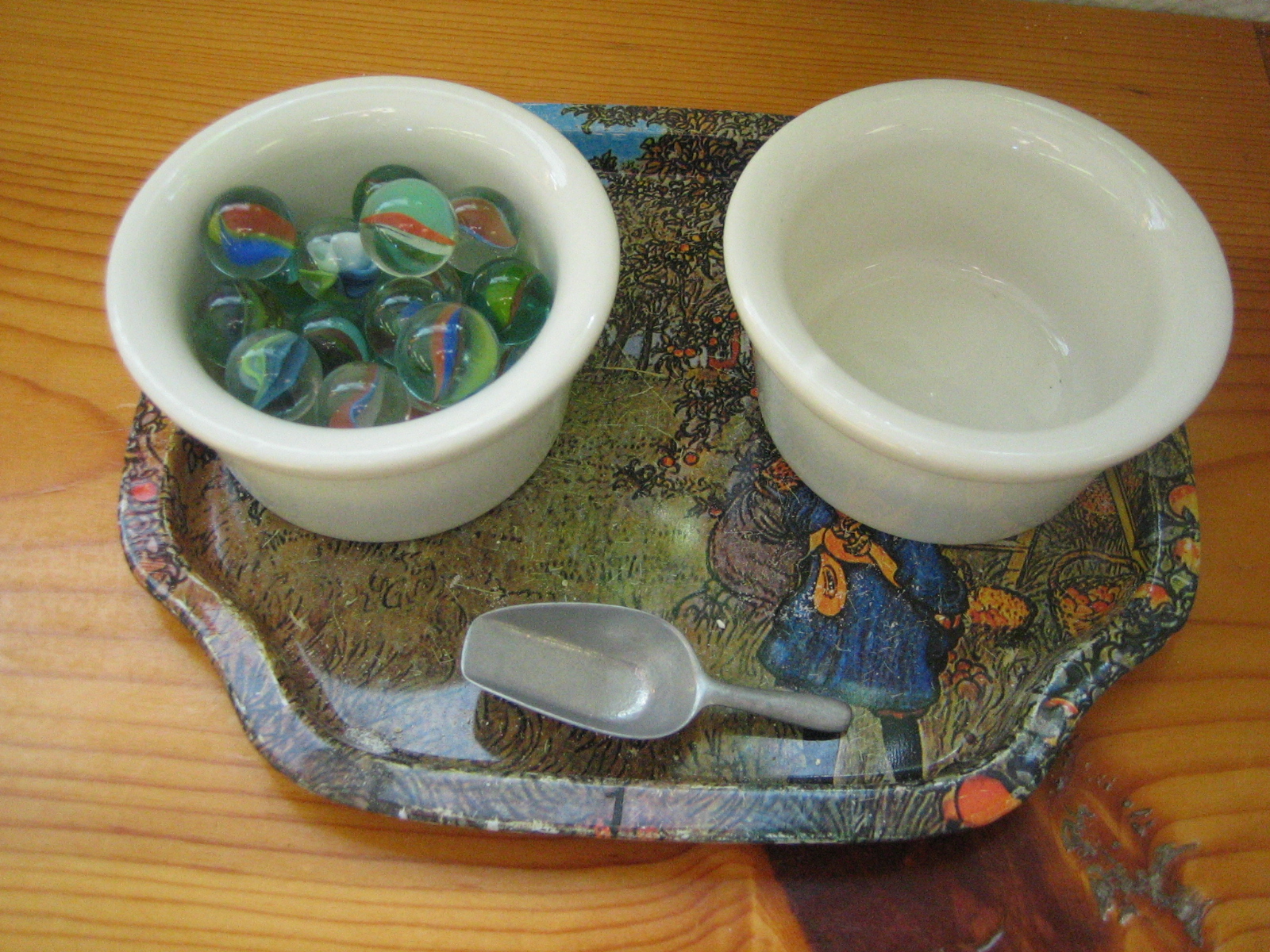
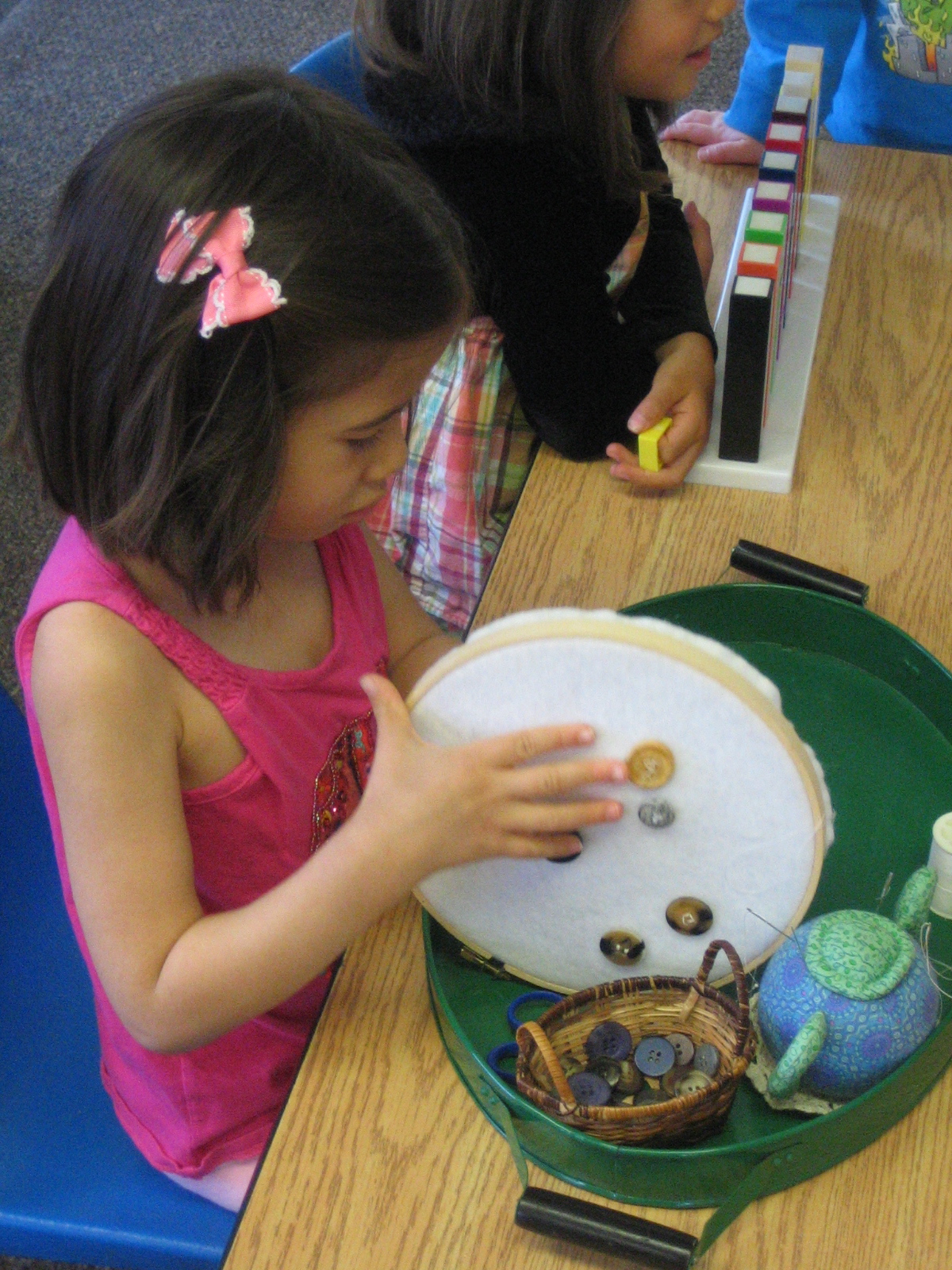
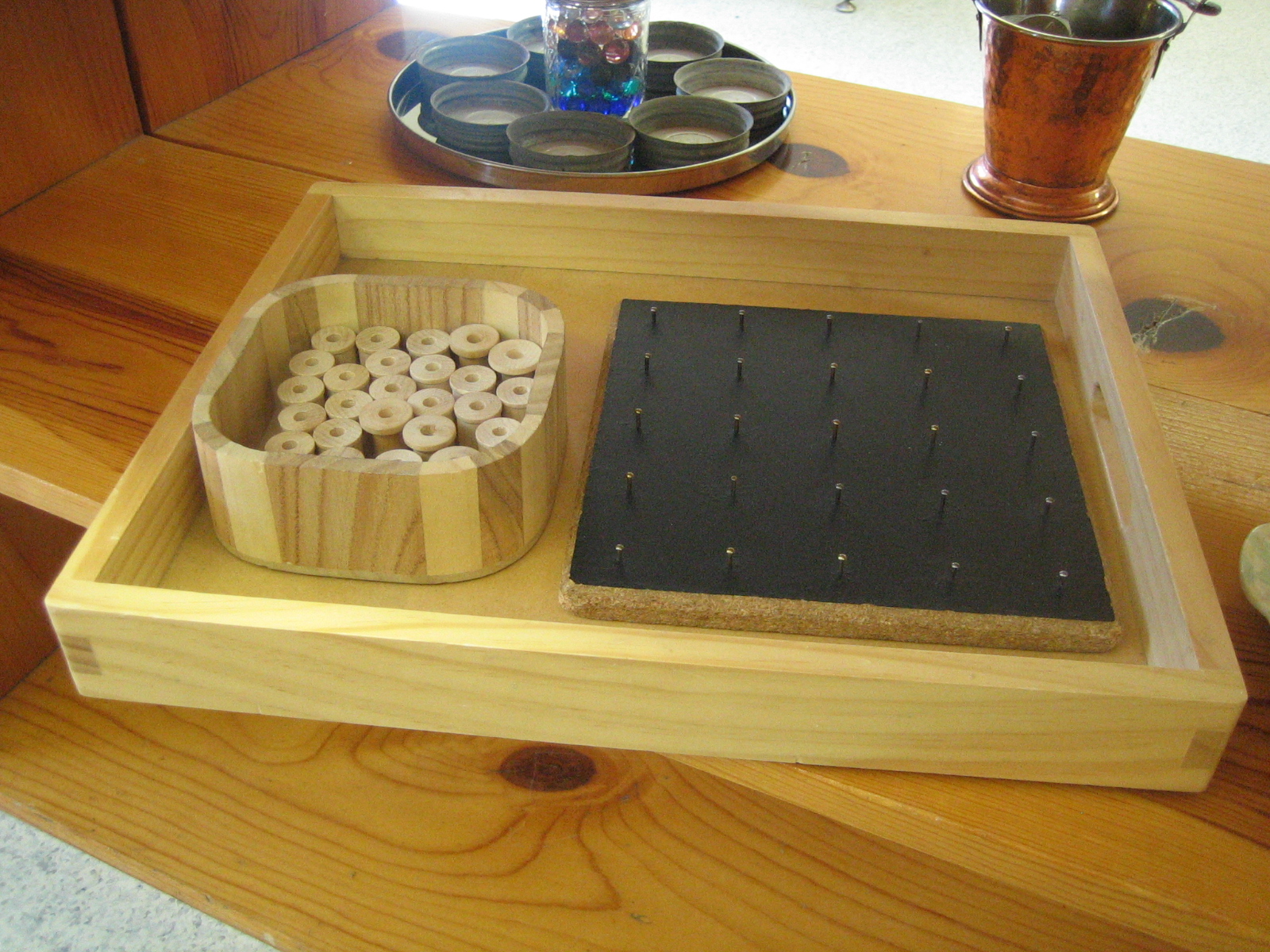
Beyond practical life, elements of pioneer culture are found all around the classroom. There are conversational pictures around the classroom depicting scenes from the late 1800s. The art shelf features Grandma Moses paintings and allows children to create quilting squares.
The teachers at Countryside Montessori have introduced many cultures to children. For each culture studied, the teachers and students work together to create a cultural environment that is available to the children throughout the day. This area is furnished collaboratively by the teachers and children. Much group discussion leads children to chose items to furnish this environment and they are able to use the environment to further their understanding of daily life in a culture different from their own. Here are some photos from the pioneer environment:

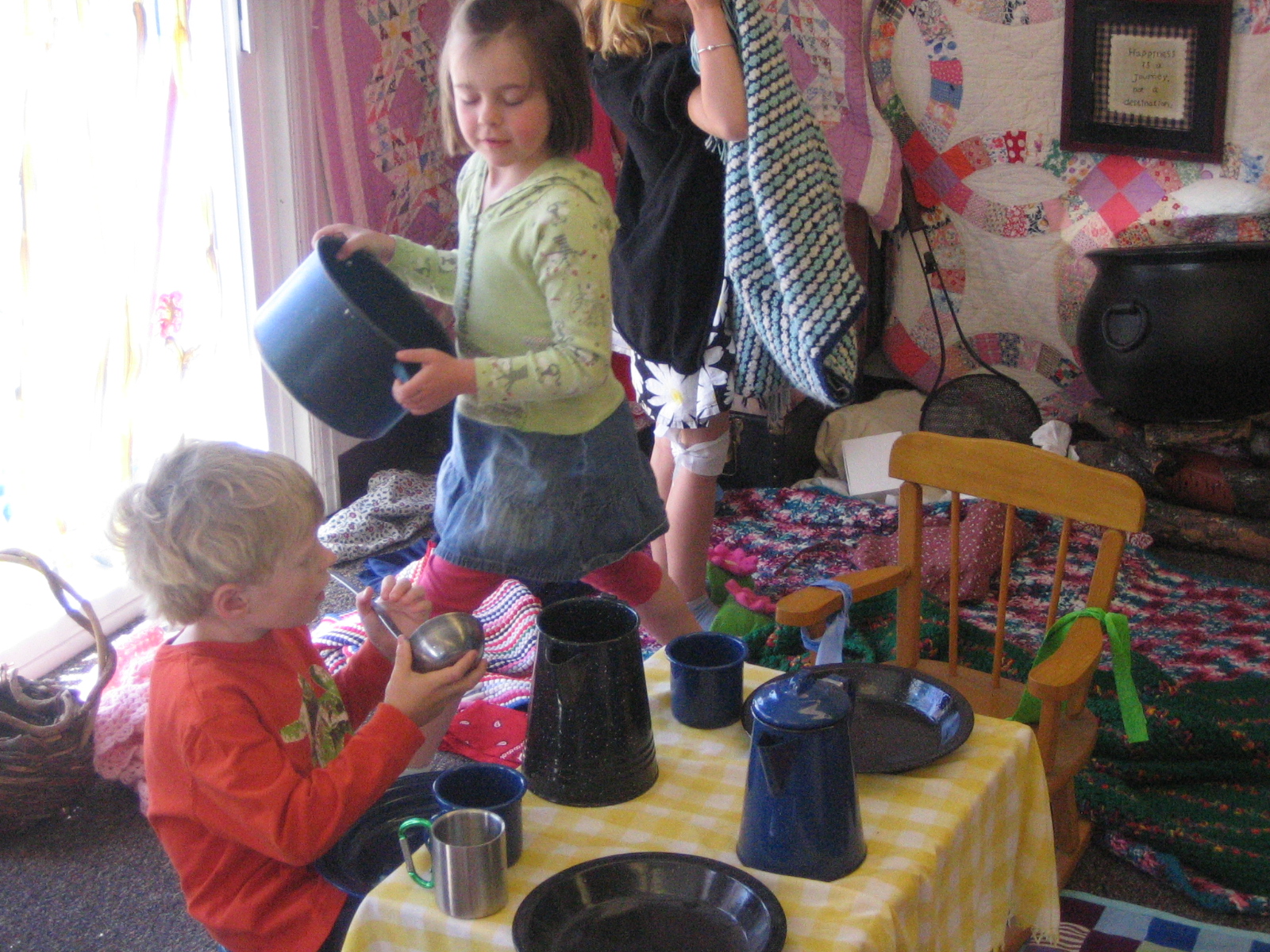

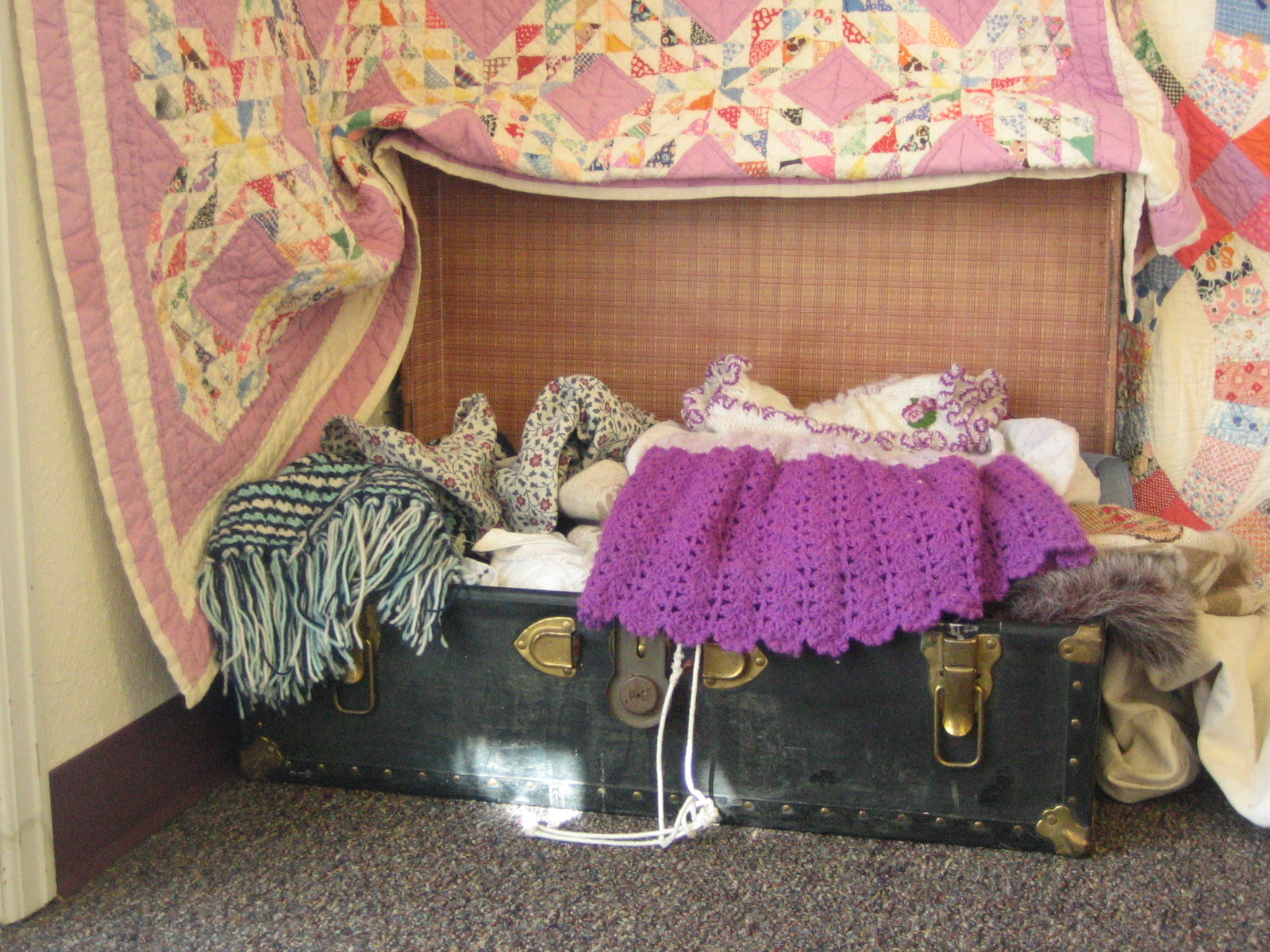
I was able to make a recording of the children using the cultural environment — just wait until you see it in action. I also interviewed Nancy Allstead to find out more about the value of creating a cultural environment, as well as how learning deeply about other cultures shapes a child’s understanding of peace. You don’t want to miss it!
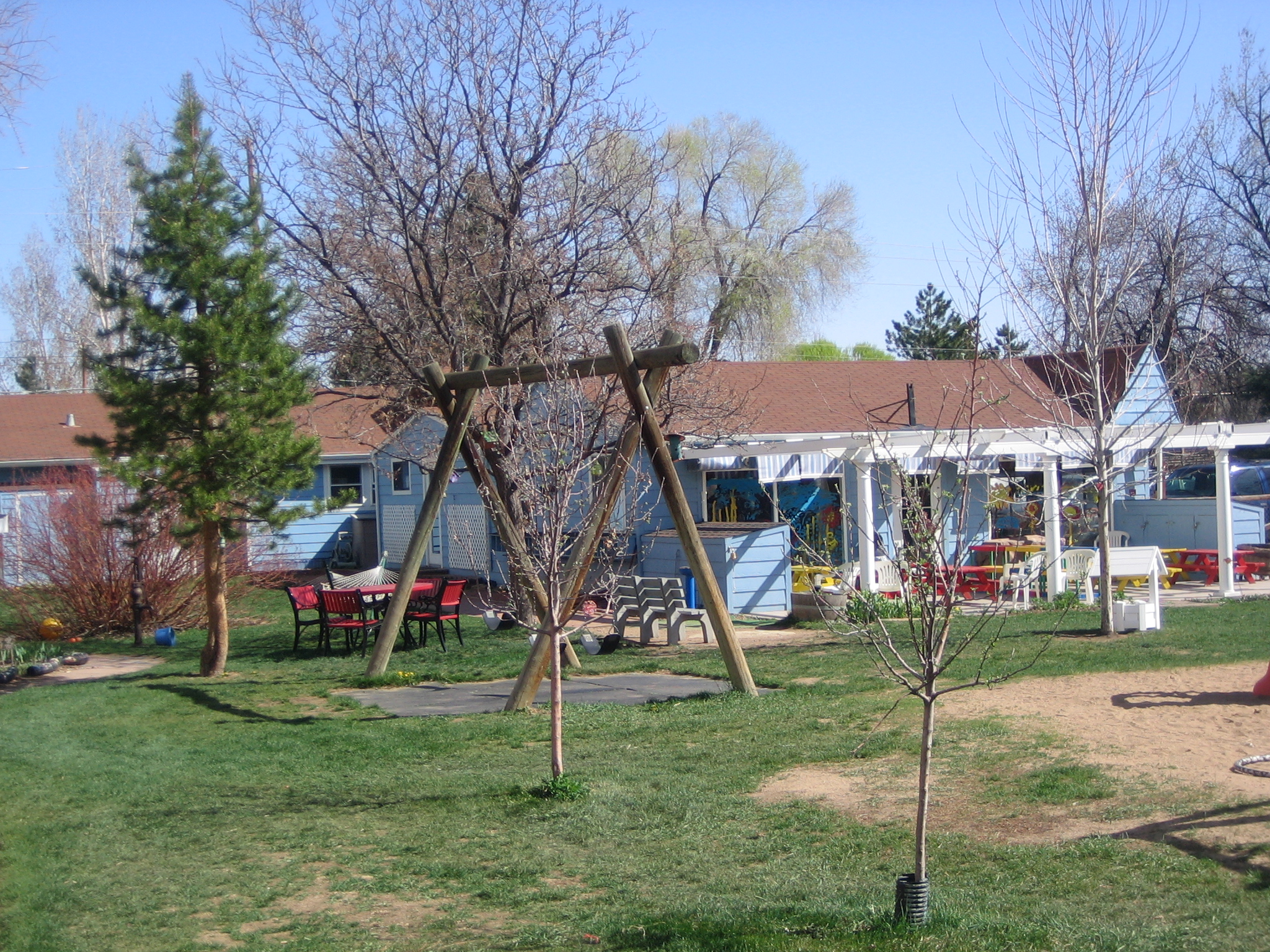
Here’s a final photo of the sprawling outdoor play space, work area and gardens:
Child’s View Montessori School (OR)
Posted on: May 15, 2010
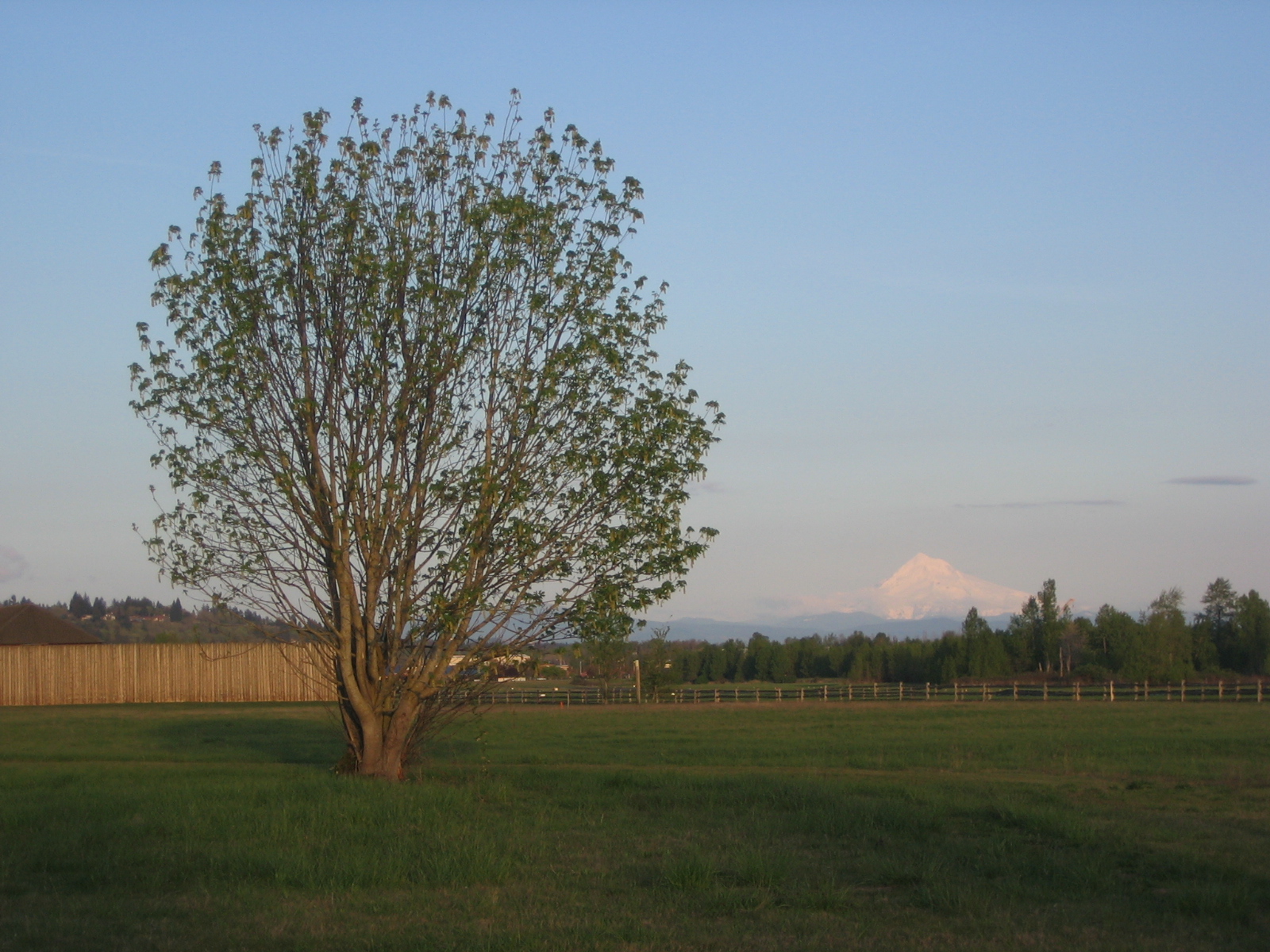 April 13, 2010 — We the Peacemakers brought me through the California desert, up the Pacific Coast and into the Beaver State to visit Child’s View Montessori School in Portland. Child’s View is a children’s house offering half-day, full-day and all-day programs for children 3-6 years old throughout the year. The school also offers a summer camp for elementary-aged children.
During my visit, I had the opportunity to interview students from two classrooms about their how they understood peace. The children also demonstrated how to solve a conflict in the classroom using a peace rug. The visit culminated with a tour of the peace garden adjacent to the play area. I also interviewed school founder and director Tamara Ulrich about her approach to founding a school based on educating for peace.
Ms. Ulrich introduced me to a movement called Season for Non-violence, a campaign for awareness about impact of non-violence to create positive change in individuals and society. The season lasts from January 30-April 4 each year. These dates commemorate the assassination dates of Mahatma Gandhi and Dr. Martin Luther King, Jr. In the past, Ms. Ulrich has served on the Oregon Season for Non-violence Task Force.
Camino de Paz School and Farm (NM)
Posted on: May 13, 2010
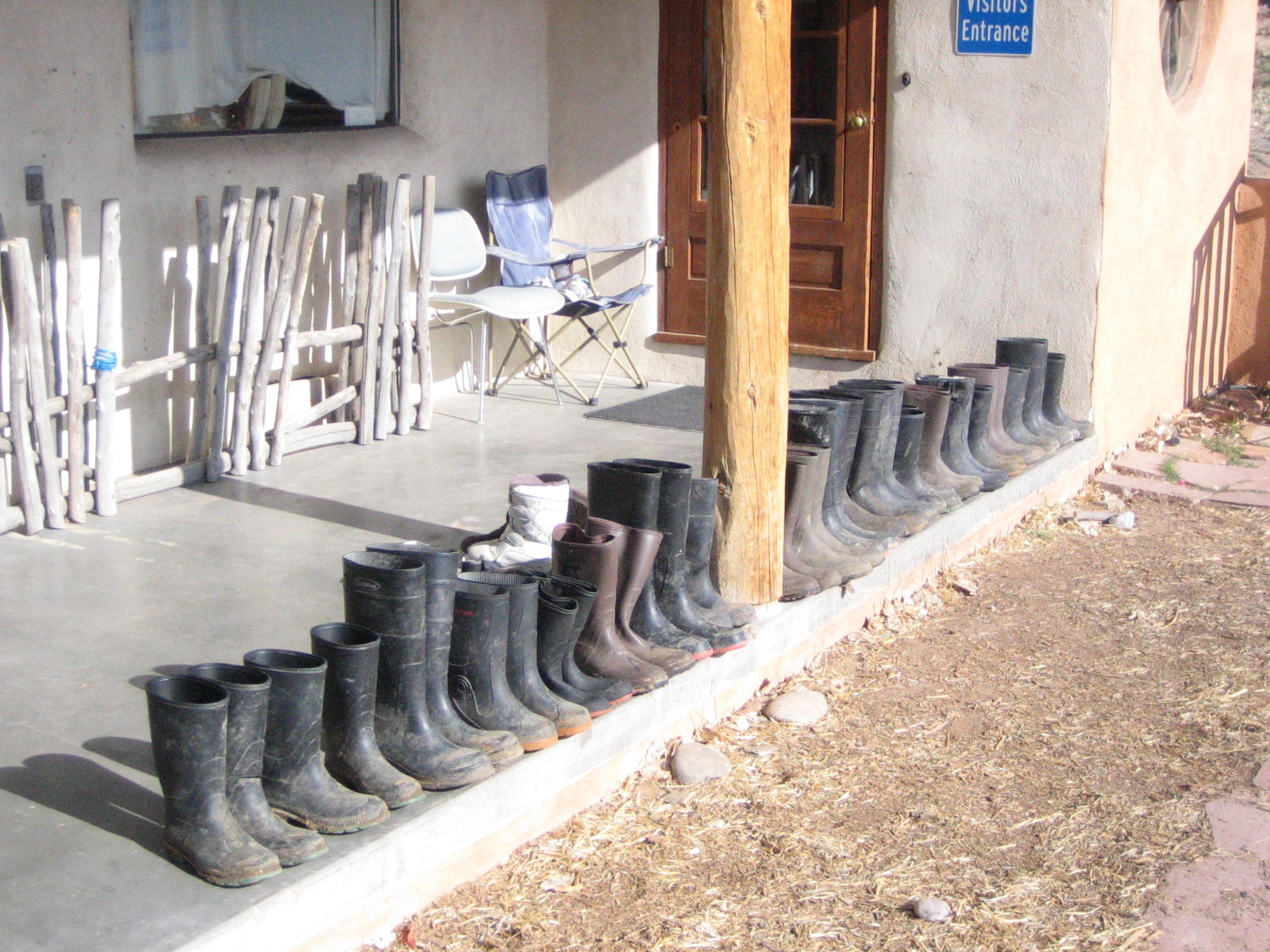
MARCH 25, 2010 — Santa Cruz, New Mexico, is home to the Camino de Paz School and Farm, a working organic farm and private middle school. In addition to academic pursuits, sixth through ninth grade students are responsible for the care of fields, greenhouses and animals including goats, sheep, horses and chickens. Students attend the full-day school program during the weekdays. On weekends, students take turns traveling to a local farmer’s market where they sell farm-raised vegetables, eggs and hand-made cheeses and crafts.
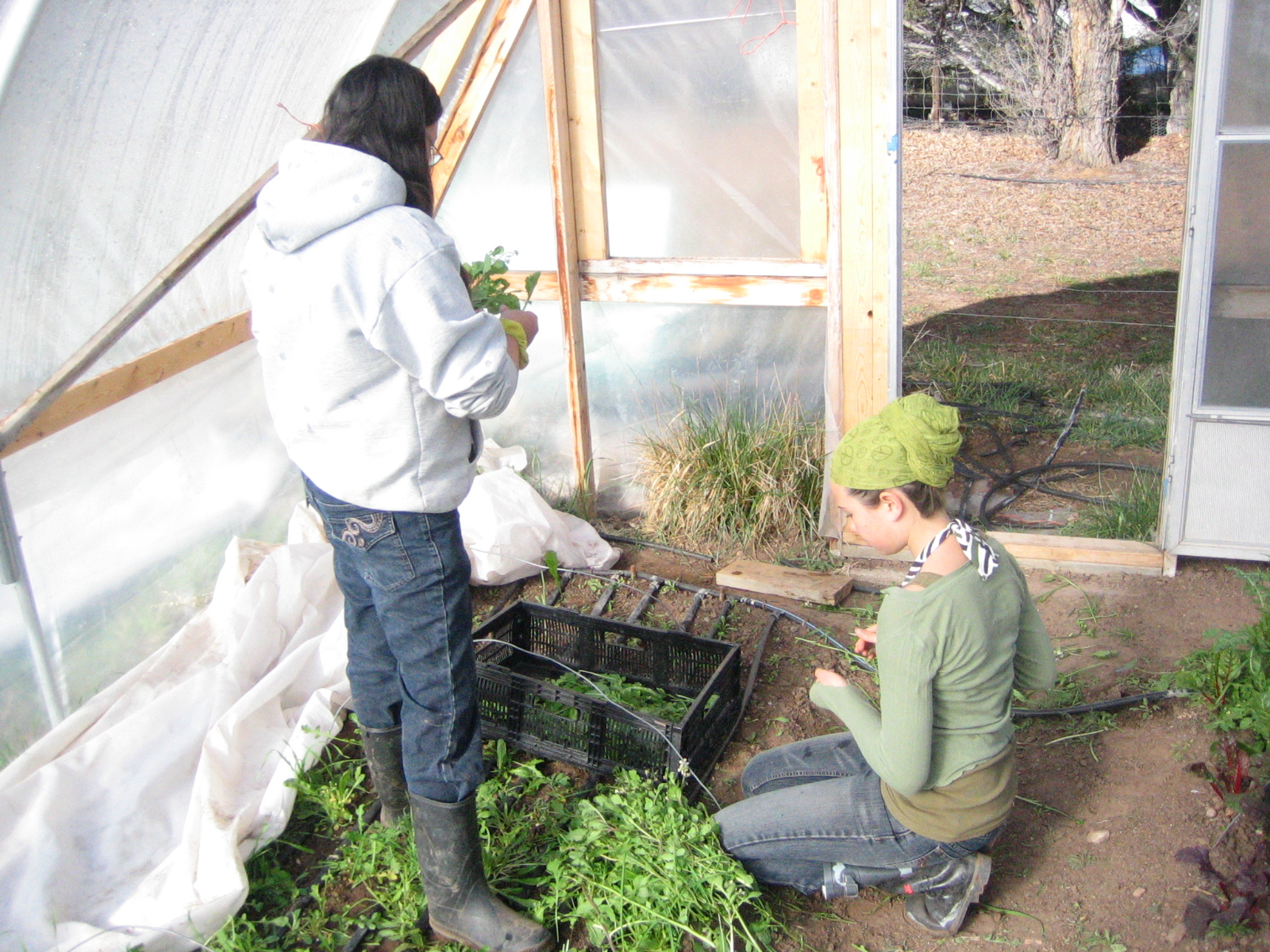
During my visit, I spoke with students, staff and school founder Patricia Pantano about how the community of Camino de Paz School and Farm works and learns cooperatively with one another and with nature.
- In: 3-6 Primary | 6-9 Elem 1 | Travel Journal
- 1 Comment
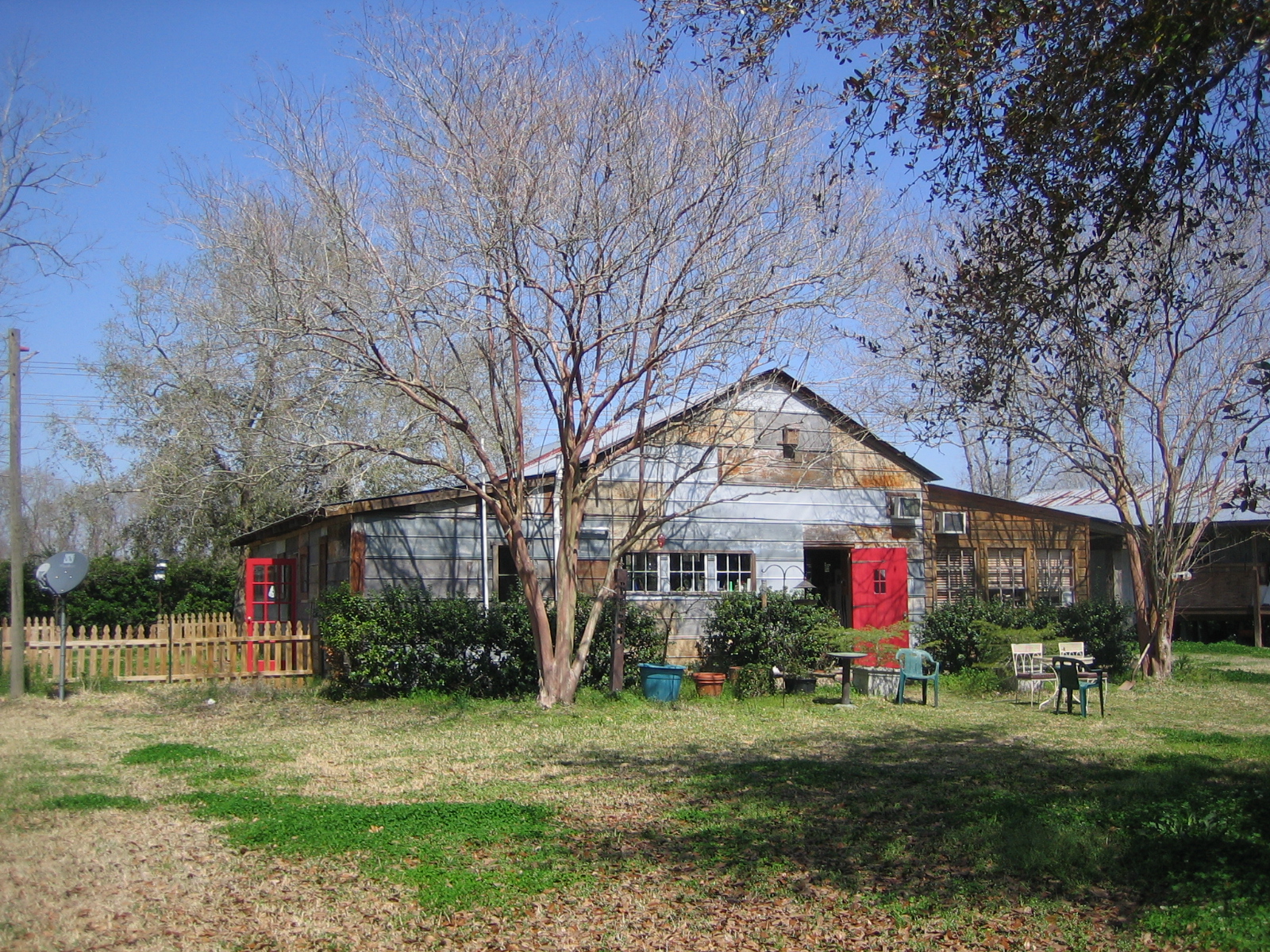 We the Peacemakers made a stop at Big Red Barn Montessori Day School and Camp in Opelousas, Louisiana. The Big Red Barn is located north of Lafayette, Louisiana, in St. Landry Parish, on a rural highway surrounded by farmland. The schoolhouse is in beautiful converted barn, full of rich woodwork and lofted ceilings. The school was founded by Jim Phillips and Christy Leichty, experienced Montessori educators. Jim and Christy are dedicated to creating a school that honors the whole child and provides rich opportunities in arts and culture.
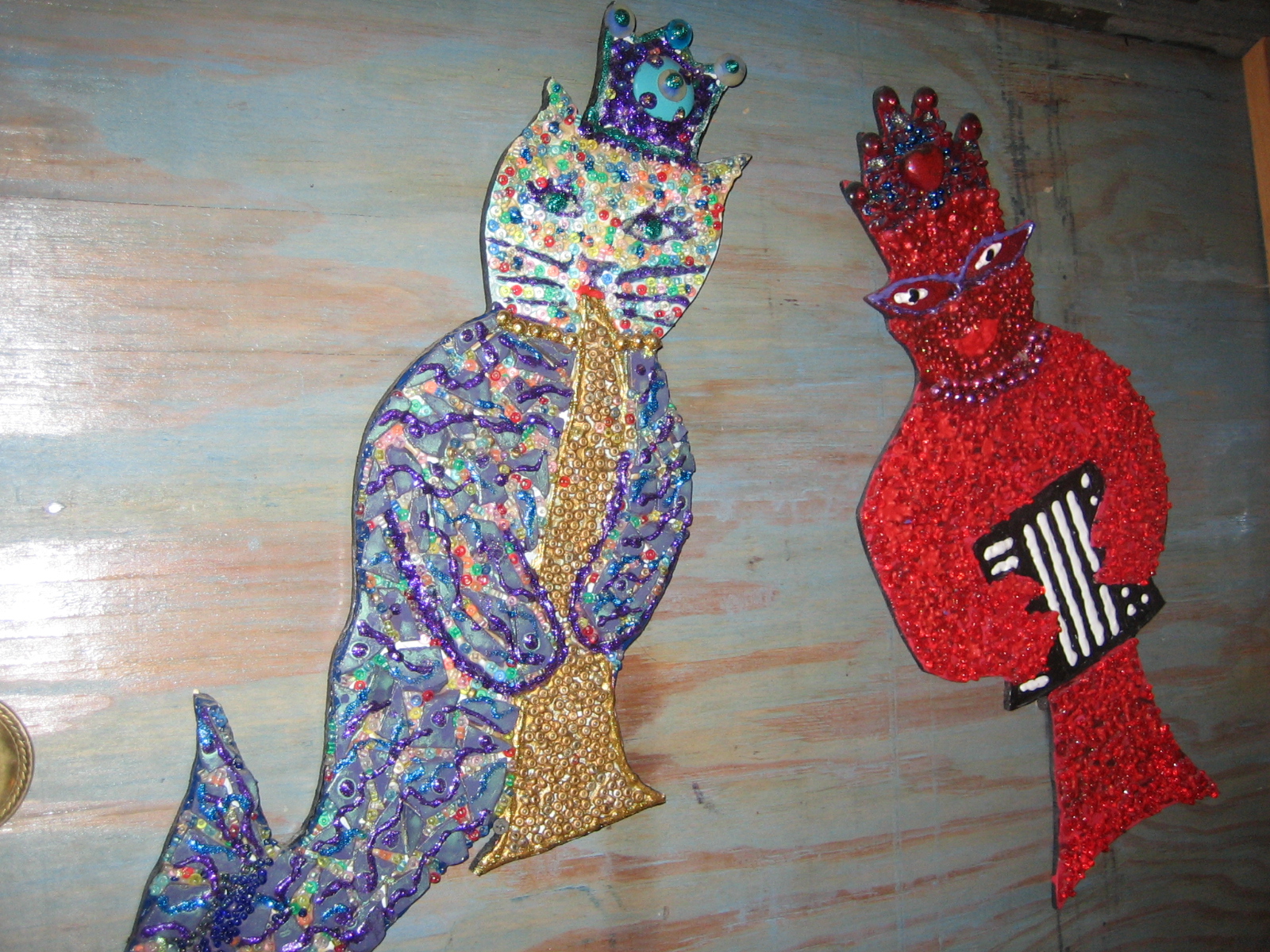 Southern Louisiana is the heart of Cajun culture. The children participate in a traditional Mardi Gras costumed celebration each year. These whimsical musical crawfish adorn the school walls.
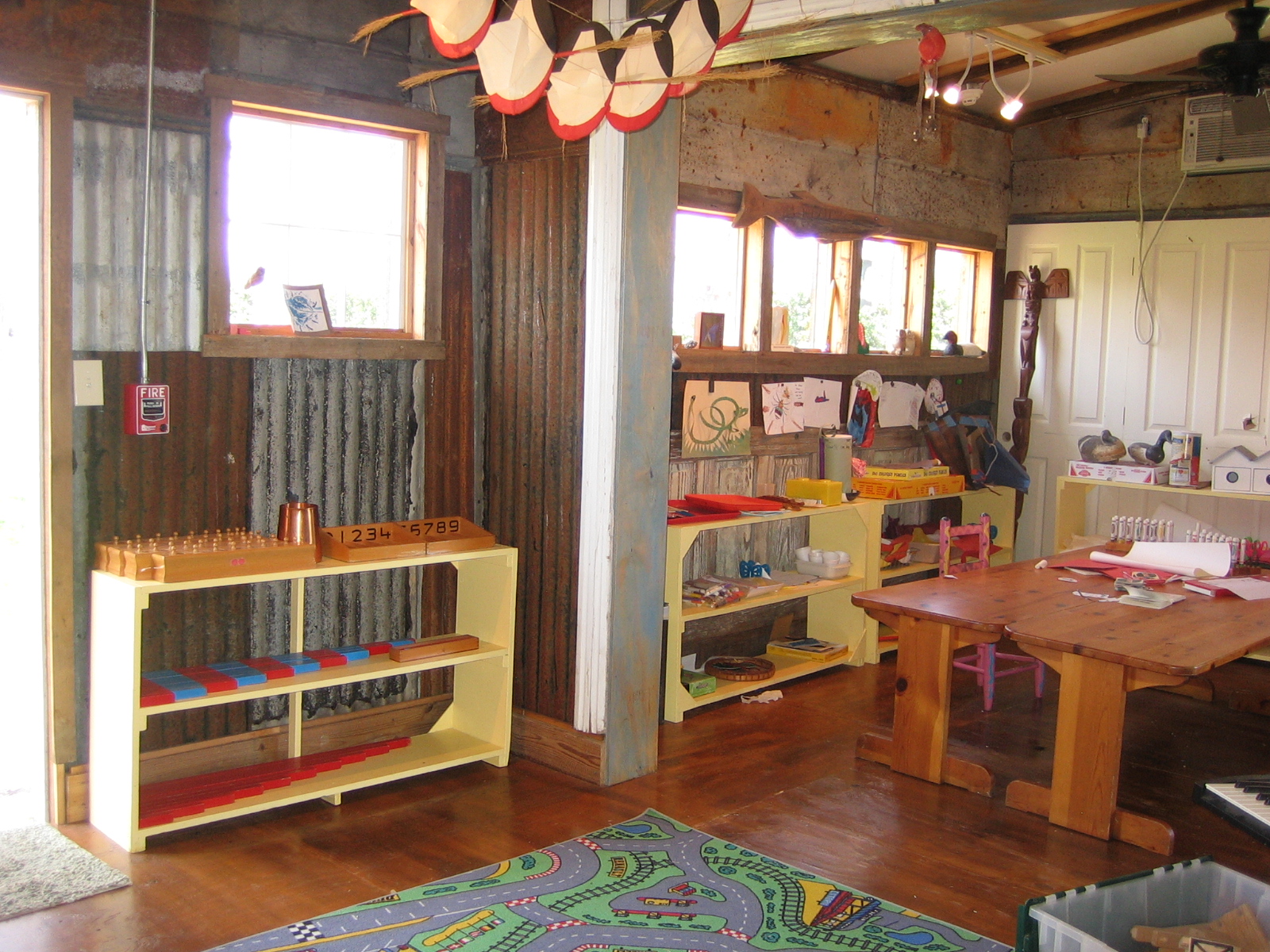 The Big Red Barn school follows a Montessori and Beyond approach,which you can read more about on their website.
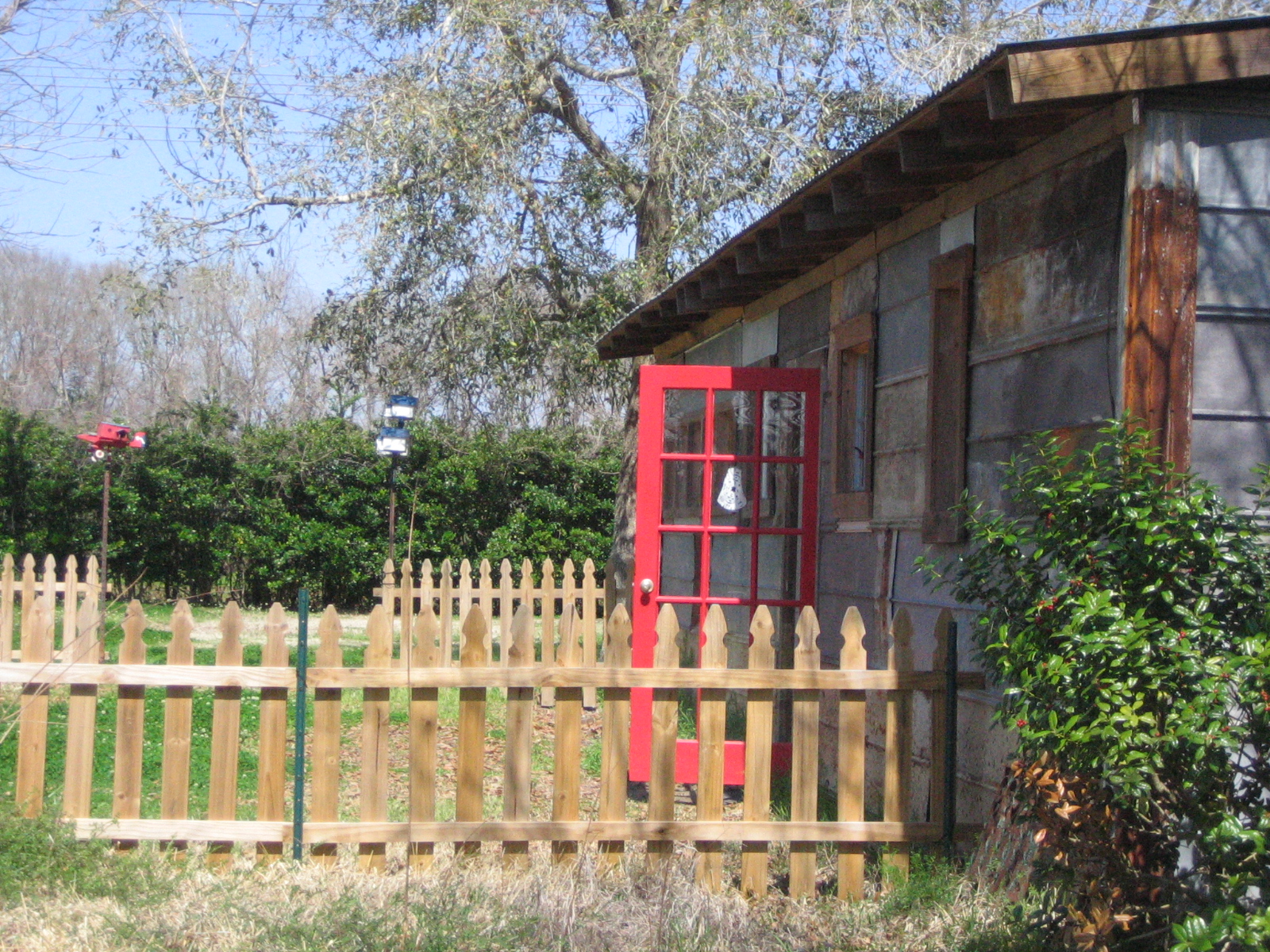
Gardening space is just out the classroom door. There are also raised beds and plenty of bird feeders.
Here’s a sneak preview of my visit to Abintra Montessori School in Nashville, Tennessee. Abintra is located in West Tennesee on a ten-acre campus. The school serves 150 children ages 3 to 15, from Primary to Middle School.
My interviews focused on finding out more about Abintra’s school song, “From Within.” The song was written by Upper Elementary students in 2006. You can hear the song and watch its music video on Abintra’s Facebook page. This song is a true expression of the peace and respect that are built into the Montessori approach. These elementary students were able to recognize and write about the community values that make their school a unique and positive place to learn. The project is a demonstration of the collaboration and creativity that are possible in a peaceful, community environment.
For teachers, parents or students who are interested in learning more about “the making of the video”, look for the full We the Peacemakers video out in May!
 We the Peacemakers: How Montessori Makes Peace