Archive for June 2010
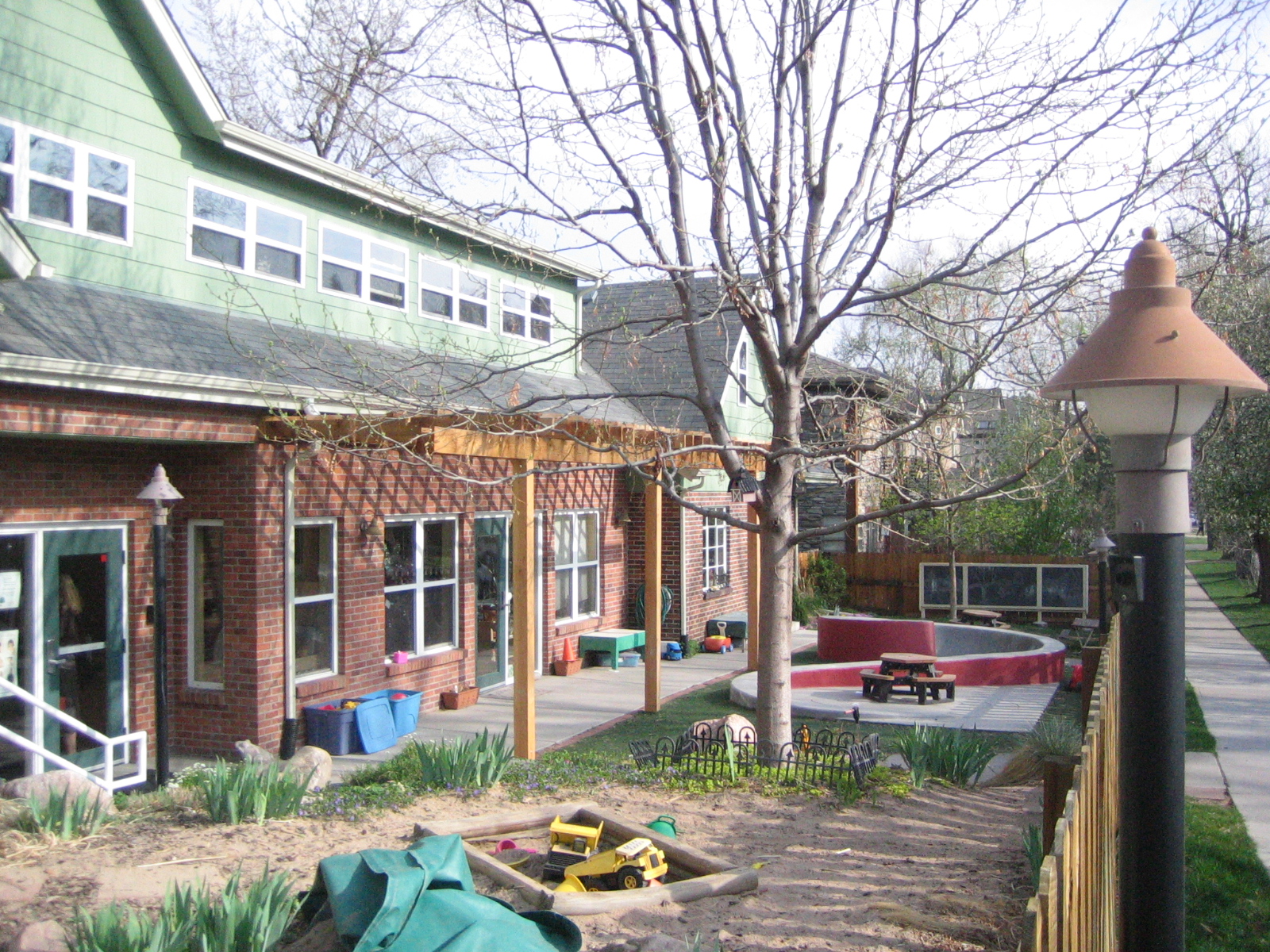
April 20, 2010 — The final stop of the We the Peacemakers tour was at Children’s Garden Montessori School, a toddler and early childhood program in Denver’s Capitol Hill neighborhood. This school provides care for around ninety students age 18 months to 6 years during the academic year in half-day and full-day programs.

While discussing my visit with Head of School Kathryn Ross, she suggested recording an interview about peace with the staff as a whole group. I am very grateful to the thirteen teachers and administrators at Children’s Garden for taking part in a group interview following a busy day of teaching. (On school picture day, no less!) This group of educators is truly generous, gracious and, as the interview reveals, passionate and articulate about Montessori. What resulted was an amazing conversation about how everyday life in a Montessori classroom teaches peace.
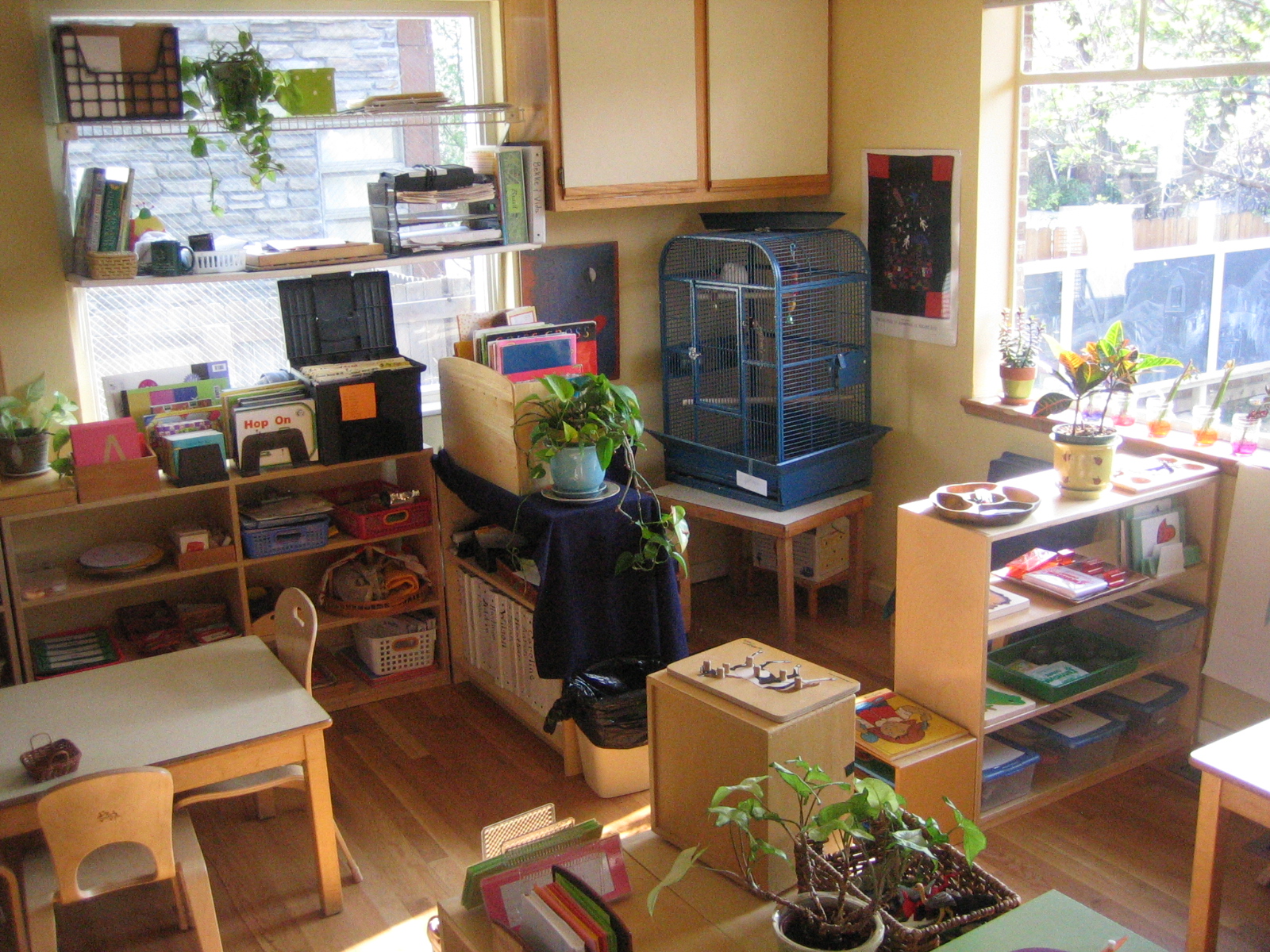
We the Peacemakers strives to celebrate innovation and best practices in Montessori. Though not the main topic of the interview, Children’s Garden Montessori School is taking a unique approach to art education. Over a number of years, Children’s Garden has been working to incorporate the Reggio Emilia approach to arts into the fabric of the school. There is an art studio known as Zach’s Place in the center of the school where children may visit to make art throughout the Montessori work cycle. A full-time art teacher guides and instructs in the studio.
To learn much, much more about this innovation you can read Head of School Kathryn Ross’s thesis on the topic. Her thesis, “Montessori and Reggio Together: Exploring Possibilities,” was awarded first place in the American Montessori Society’s 2010 Master’s Thesis Award. Congratulations! Here is a link to the full-text thesis and a link to the American Montessori Society’s Thesis and Dissertation Award page.
 In the big backyard at Children’s Garden.
Countryside Montessori School (CO)
Posted on: June 1, 2010
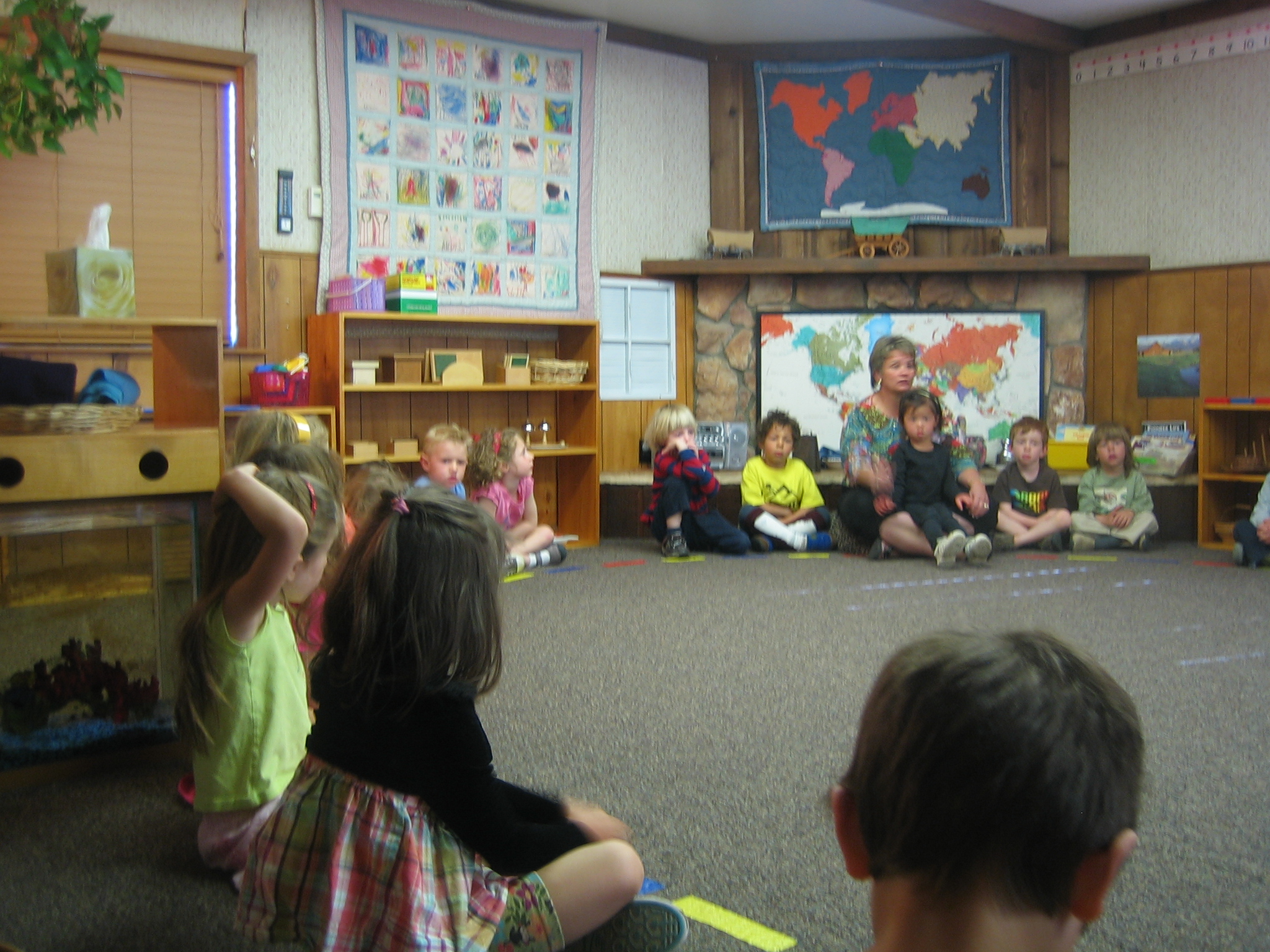
Boulder, CO — April 19, 2010 — The teachers at Countryside Montessori School are a talented team of educators who work with 40 3-6 years old in an all-day, all-year program. The whole group of children attend school together in a spacious and homey converted residence. All of the familiar practical life, sensorial, math, geography and language materials are on the shelves and in use throughout my visit. However, one object in the environment immediately caught my attention:
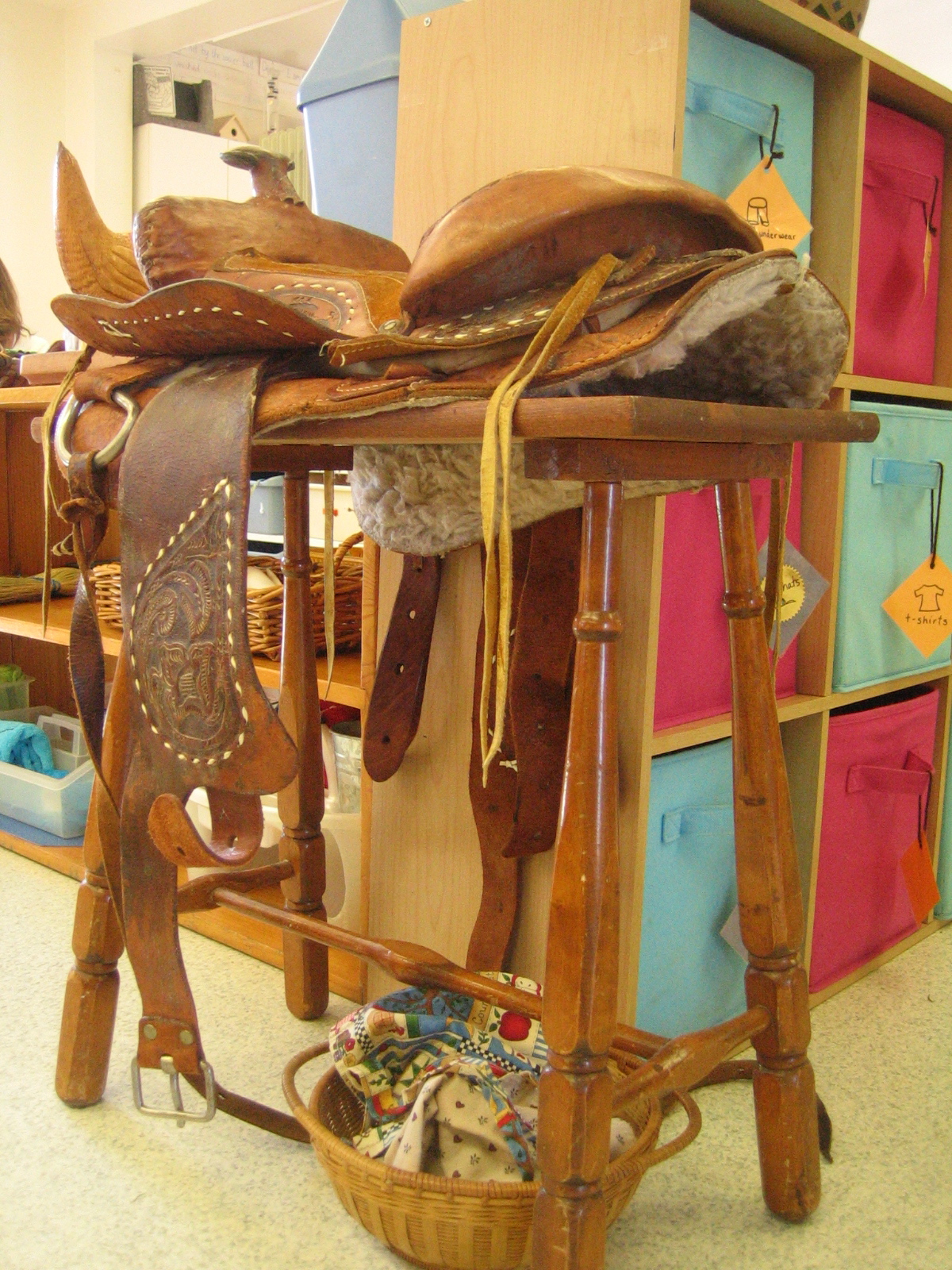
A saddle in a Montessori classroom?
It begins to make sense when Nancy Ahlstrand, the school founder and director, explained Countryside’s unique approach to the cultural curriculum. Over time, Countryside has developed a cultural curriculum that literally infuses each area of the classroom with materials and exercises that relate to the culture being studied. Can you figure out the saddle yet?
During my visit, the children at Countryside were learning about a cultural history that exists in their own backyards: the lives of Colorado pioneers. During group time, children together imagine the lives of pioneers traveling long distances by horse and wagon.
The saddle brings a touch of pioneer life to the practical life work of polishing. Additional practical life shelves are full of materials that would be familiar items to pioneer children:
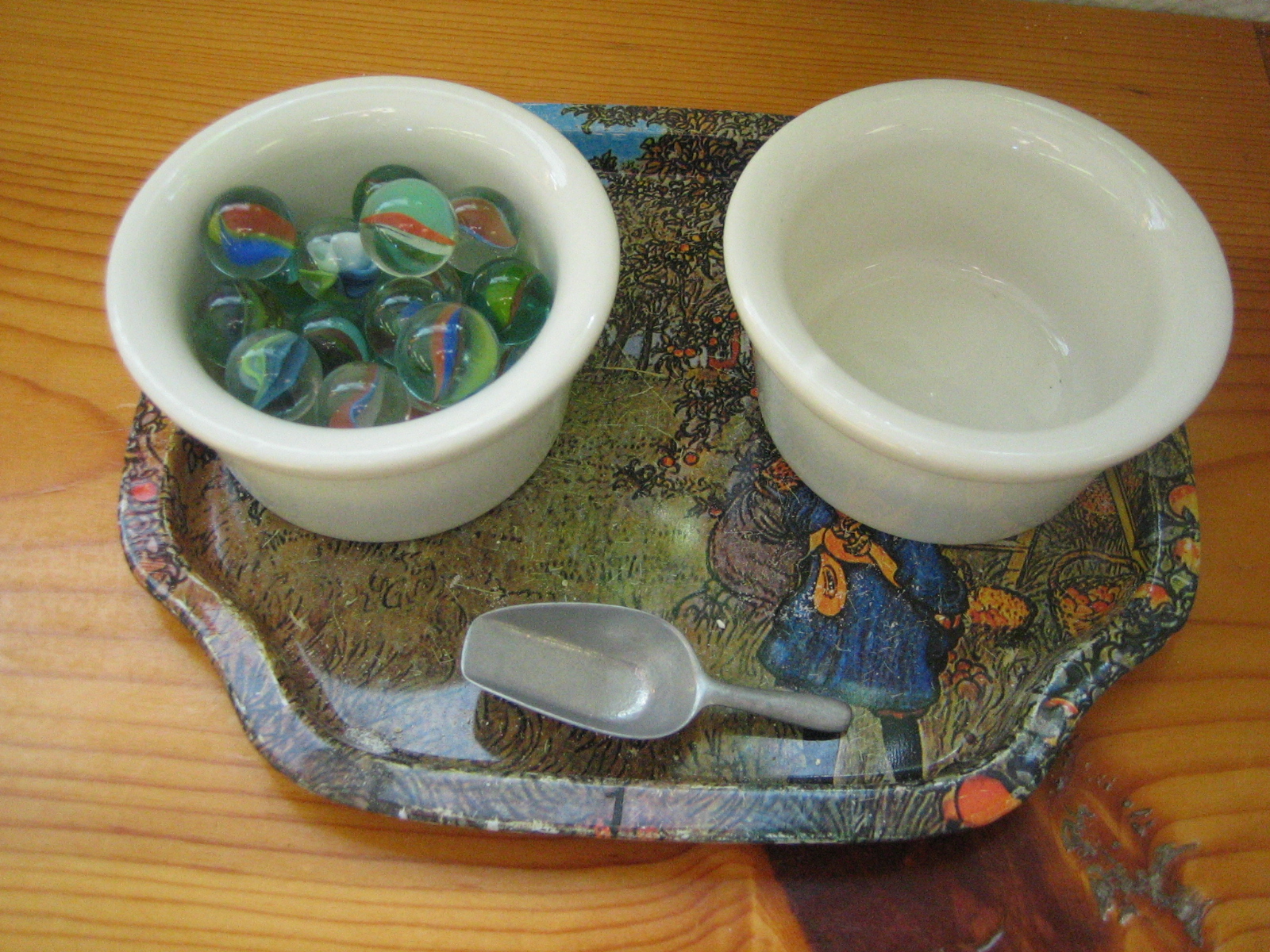
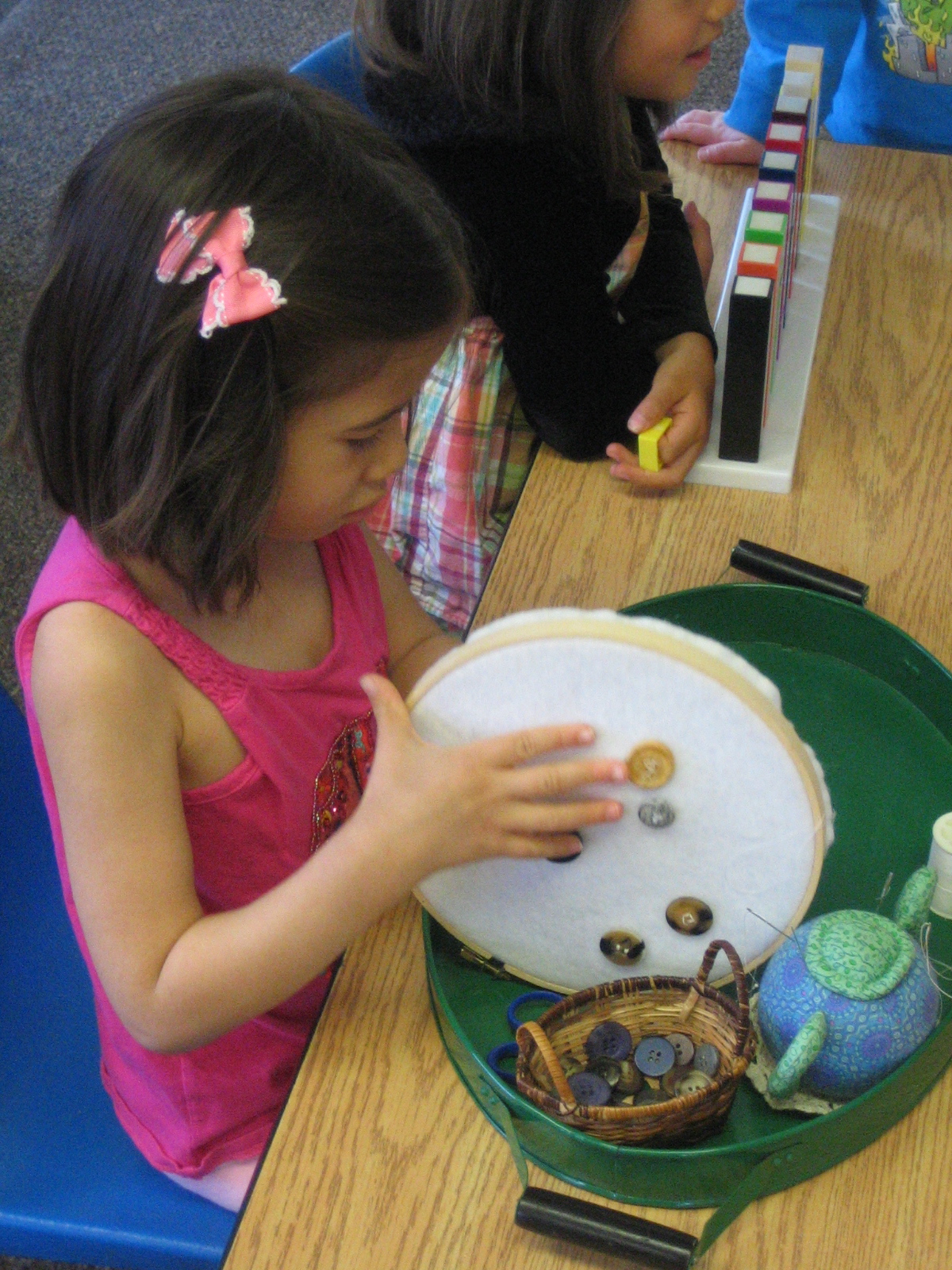
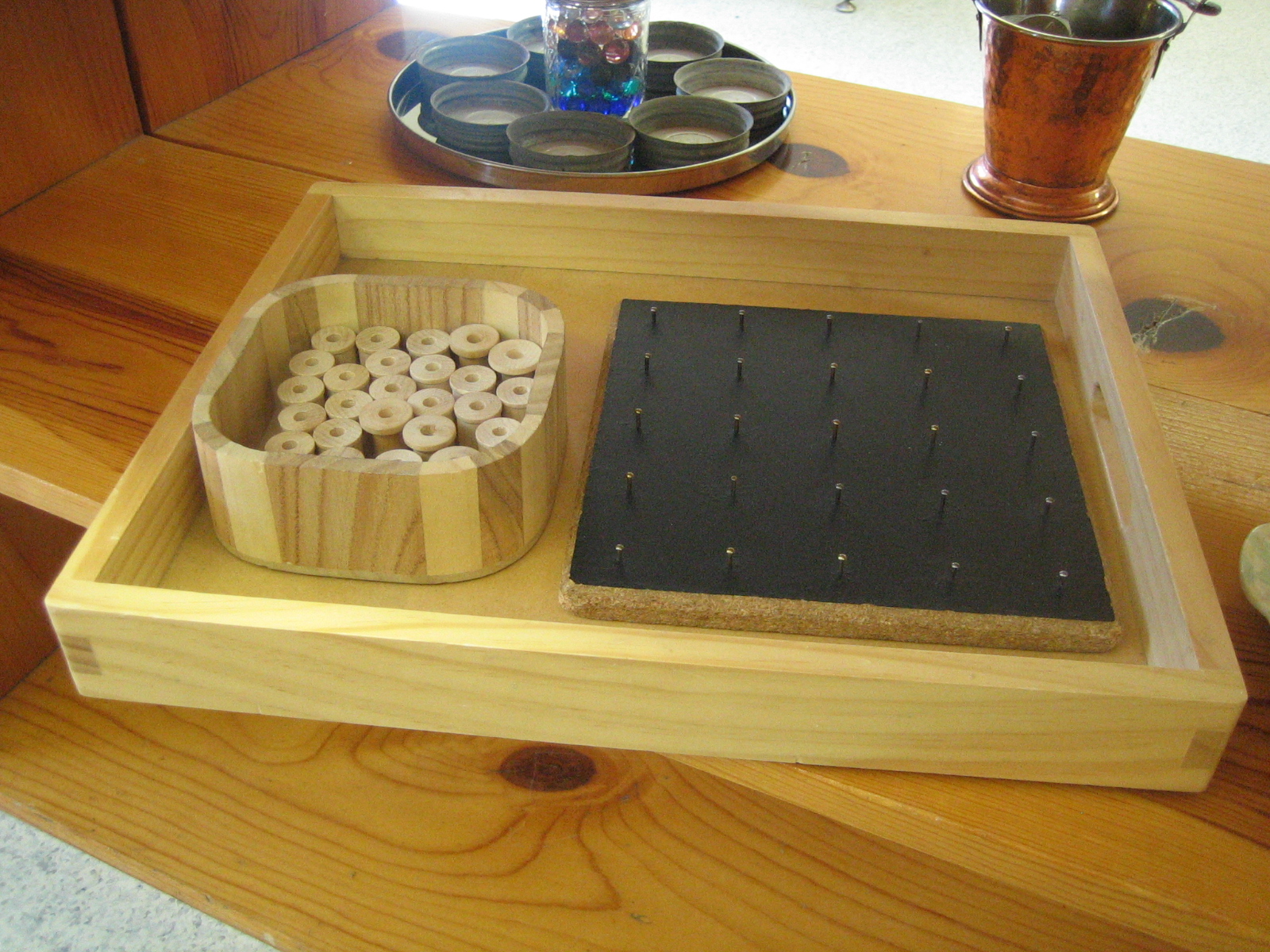
Beyond practical life, elements of pioneer culture are found all around the classroom. There are conversational pictures around the classroom depicting scenes from the late 1800s. The art shelf features Grandma Moses paintings and allows children to create quilting squares.
The teachers at Countryside Montessori have introduced many cultures to children. For each culture studied, the teachers and students work together to create a cultural environment that is available to the children throughout the day. This area is furnished collaboratively by the teachers and children. Much group discussion leads children to chose items to furnish this environment and they are able to use the environment to further their understanding of daily life in a culture different from their own. Here are some photos from the pioneer environment:

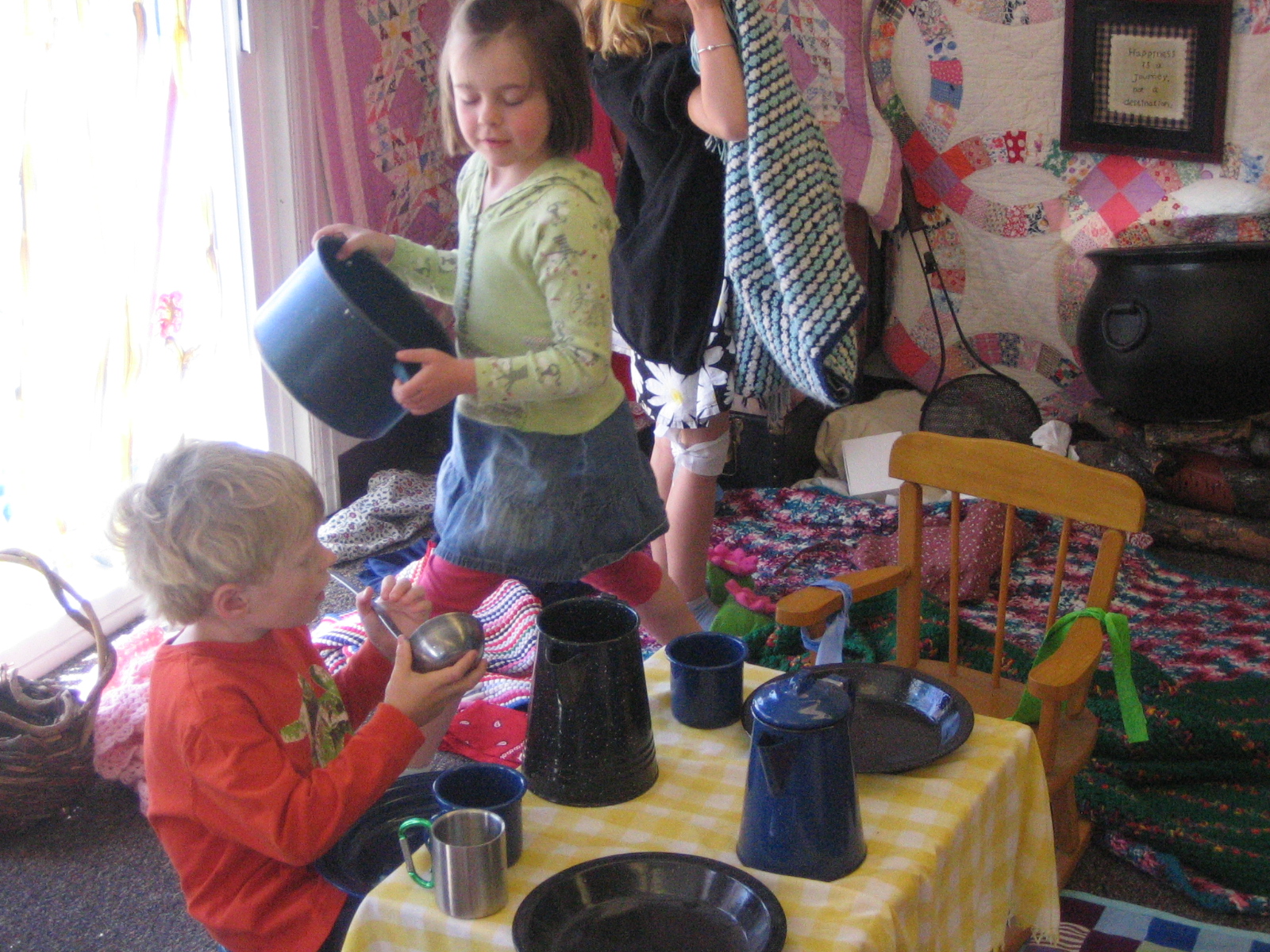

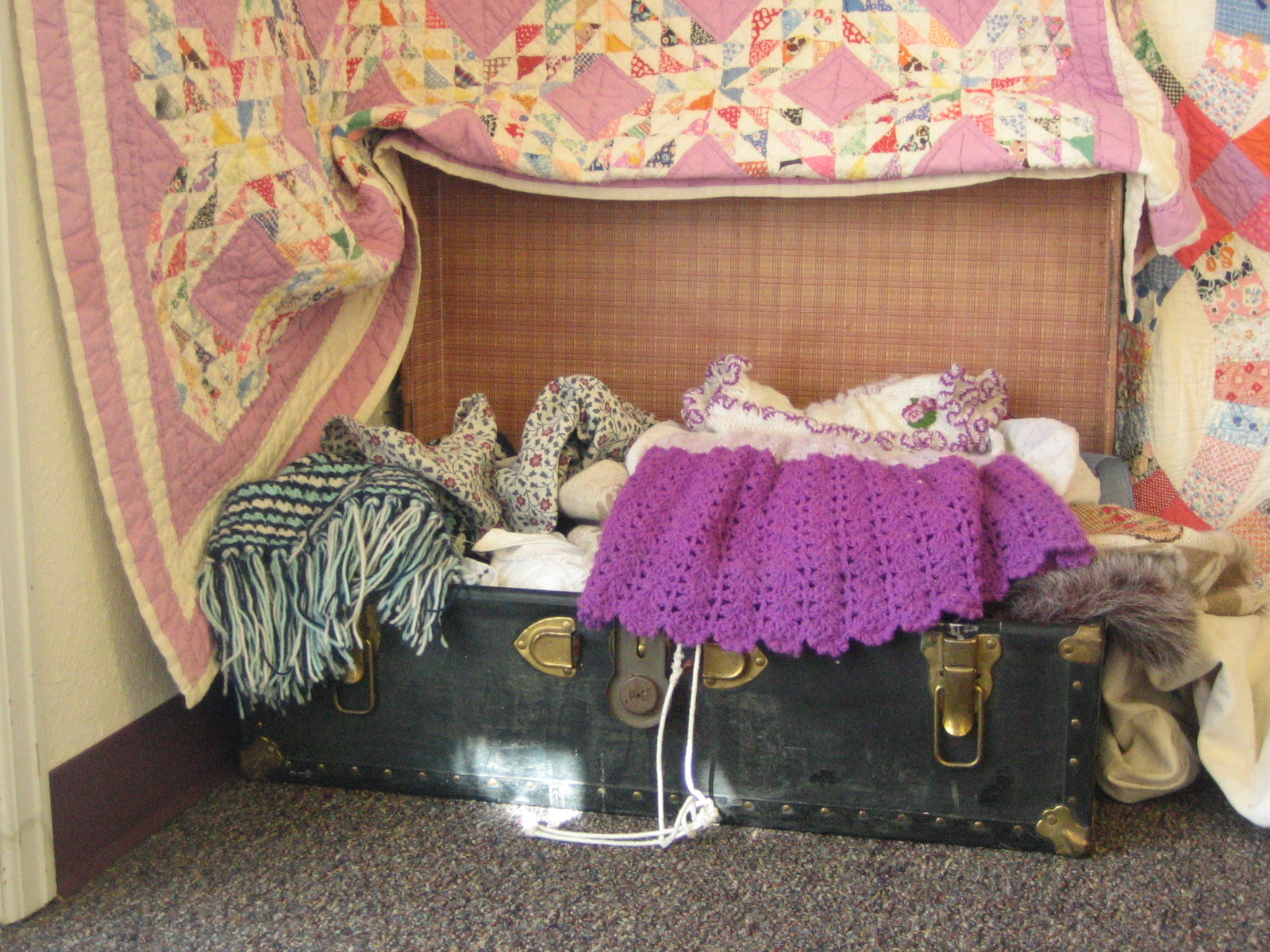
I was able to make a recording of the children using the cultural environment — just wait until you see it in action. I also interviewed Nancy Allstead to find out more about the value of creating a cultural environment, as well as how learning deeply about other cultures shapes a child’s understanding of peace. You don’t want to miss it!
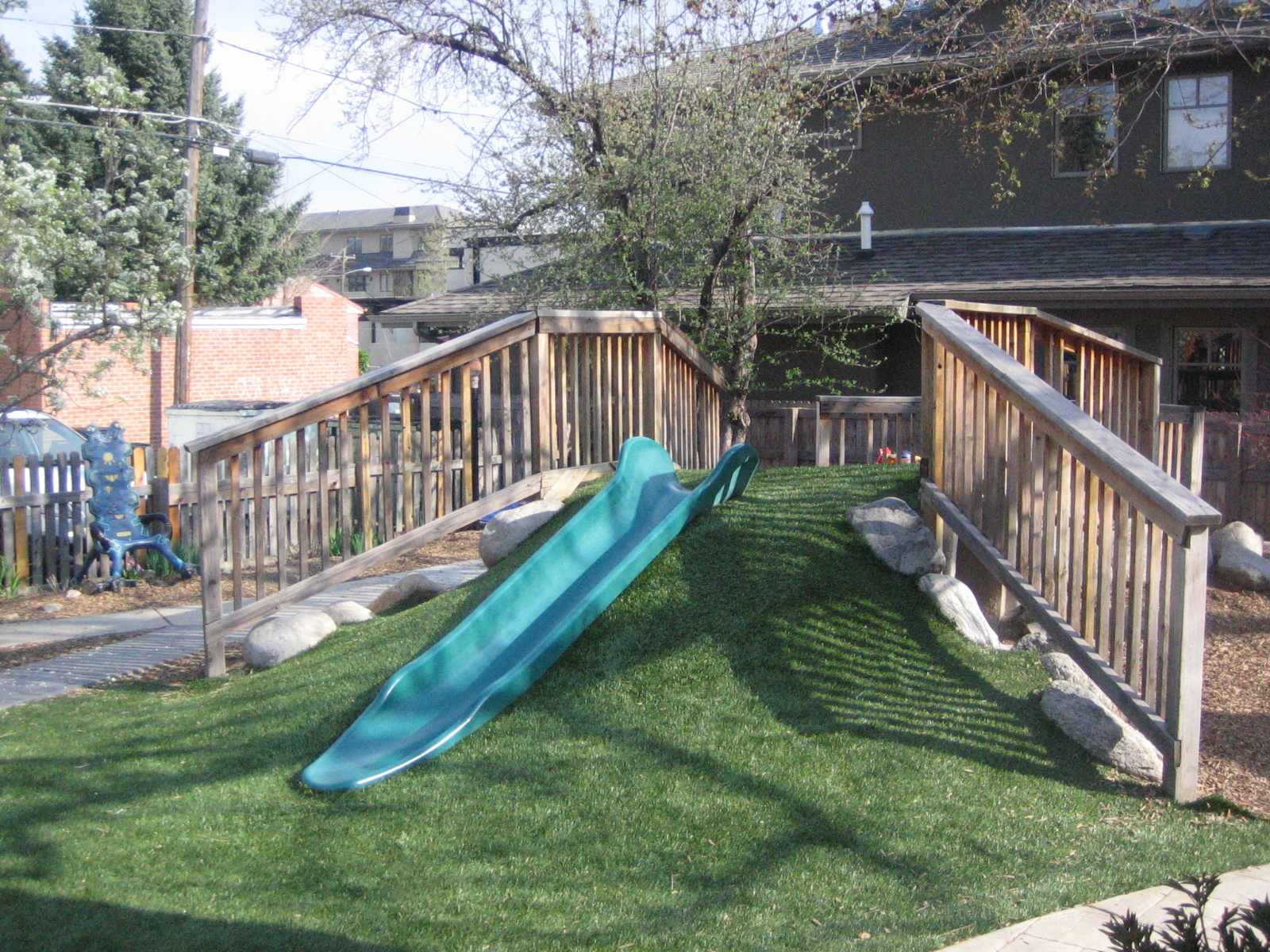
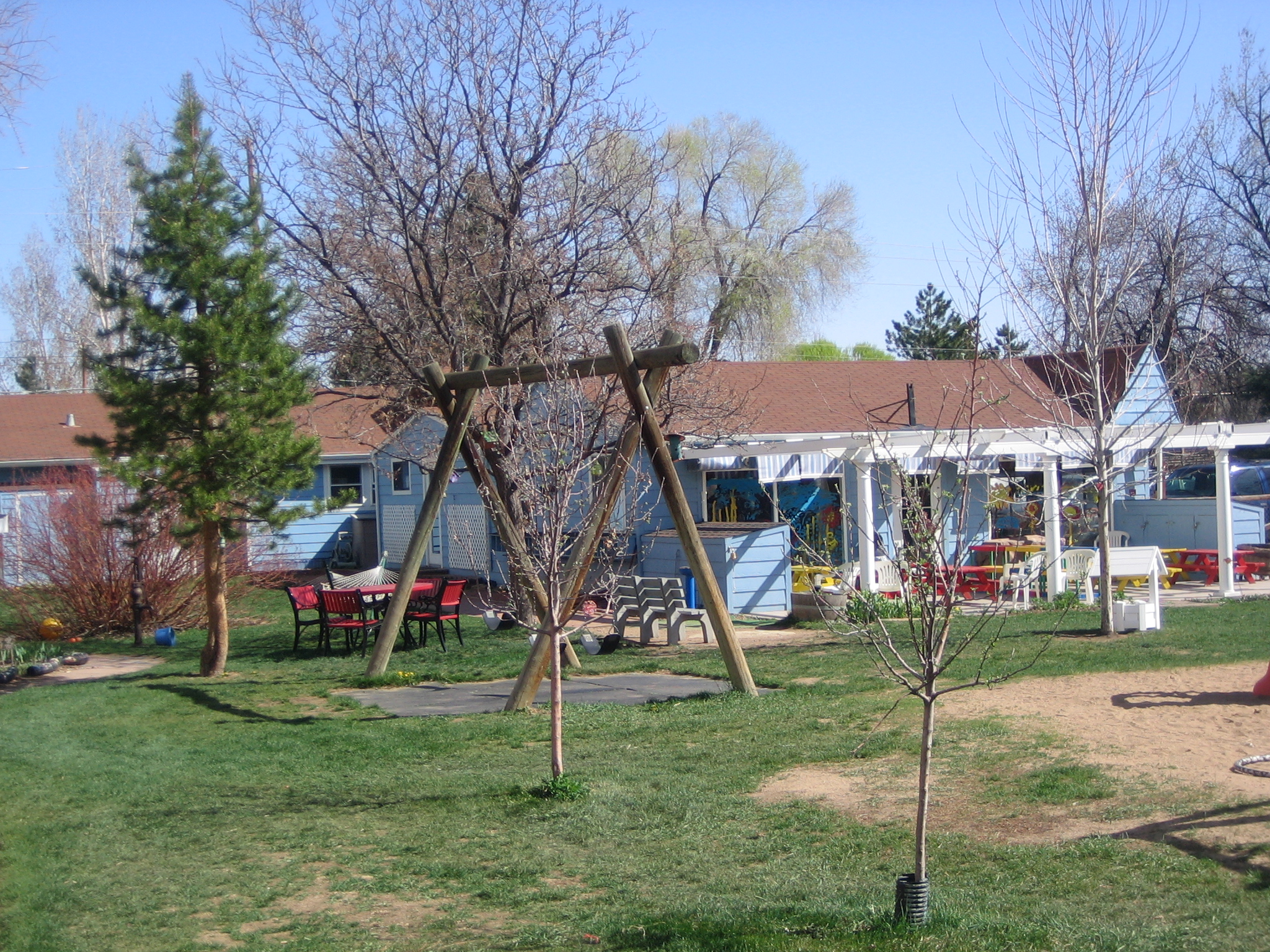
Here’s a final photo of the sprawling outdoor play space, work area and gardens:
 We the Peacemakers: How Montessori Makes Peace